
Hire in Montenegro
Begin your journey into human resources best practices and recruitment in Montenegro from this point onward.

Montenegrin Currency
Euro (EUR)

The Capital of Montenegro
Podgorica
Time Zone in Montenegro
GMT + 2
Important Facts About the Country of Montenegro
Introduction to Montenegro
Situated in Southeastern Europe, Montenegro encompasses a land area of 13,812 square kilometers. The capital city, Podgorica, occupies 10.4% of the total territory and is inhabited by approximately 31% of the country’s population. Cetinje, the former royal capital, houses various national institutions, including the official residence of the President of Montenegro. Attaining an upper-middle-income status, the country’s economy is predominantly driven by the service sector.
What to Know about Montenegro’s Geography
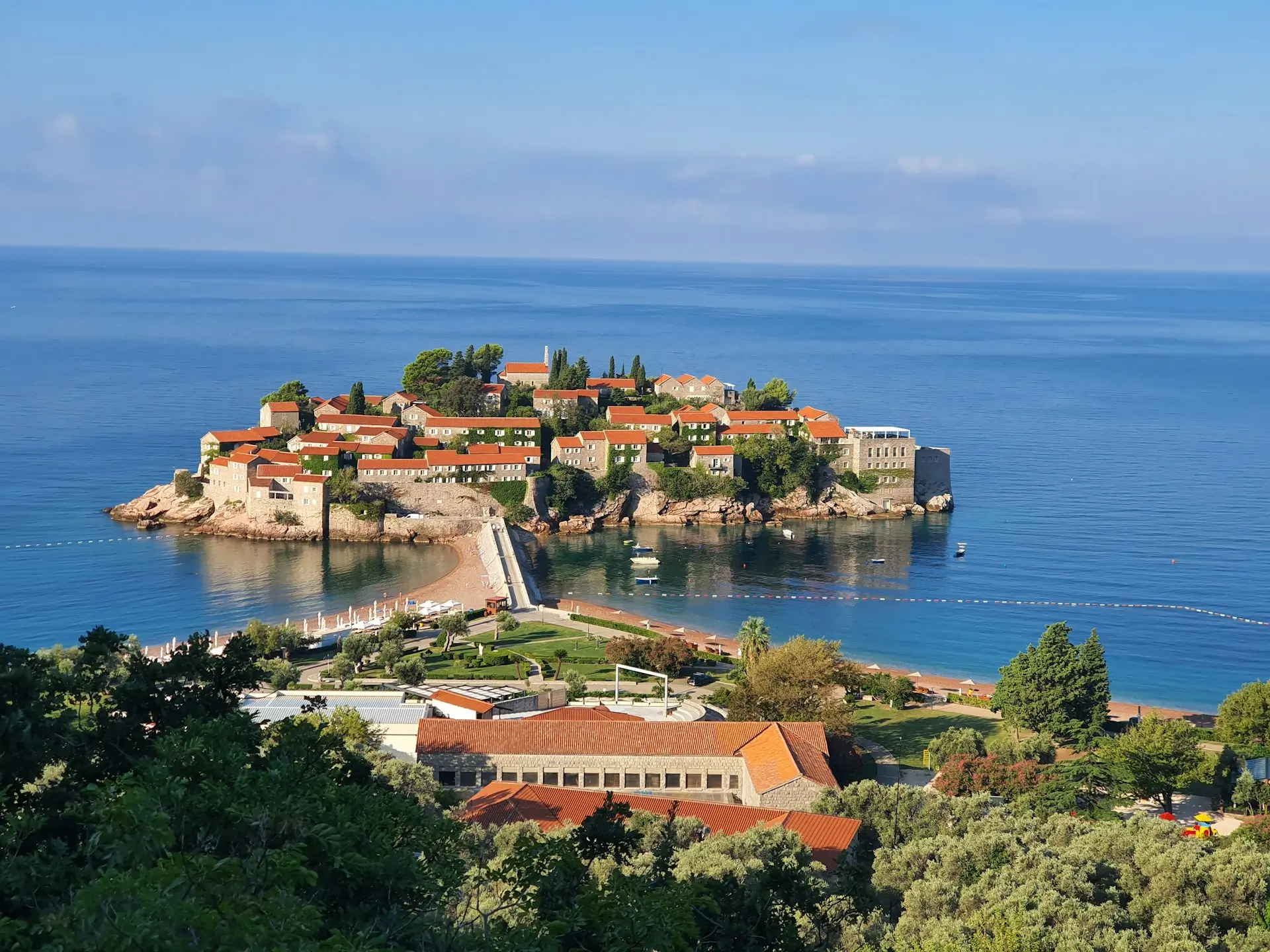
Montenegro is bordered by a number of countries, namely Bosnia and Herzegovina, Serbia, Kosovo, Albania, and Croatia. Additionally, it boasts a 293.5-kilometer-long coastline along the Adriatic Sea to the west.
Climate in Montenegro
Montenegro experiences diverse climates based on its geographical regions. Coastal areas exhibit a classic Mediterranean climate, while inland regions feature a more continental climate, leading to colder winters, especially at elevated altitudes. The country receives substantial precipitation, particularly in hilly and mountainous areas overlooking the sea and along the coastal strip.
The Culture of Montenegro
Montenegro boasts a distinctive and vibrant culture, shaped by a melding of diverse influences. This cultural tapestry is woven from Orthodox, Ottoman (Turkish), Slavic, Central European, and maritime Adriatic strands, with significant Italian elements, notably from the Republic of Venice. The country shelters many sites of cultural and historical importance, featuring relics from the pre-Romanesque, Gothic, and Baroque eras. Particularly in the coastal areas, Montenegro is celebrated for its religious monuments, which stand as eloquent witnesses to its rich and varied cultural legacy.
Religions Observed in Montenegro
Situated at the intersection of multiple religious traditions, Montenegro’s distinctive cultural and religious tapestry has been significantly influenced by its diverse faiths. The country’s Muslim and Christian communities, despite their distinct beliefs, have embraced coexistence, fostering a unique cultural fusion. Orthodox Christianity dominates the religious landscape, with more than 70% of the population professing adherence. Muslims constitute the most significant religious minority, making up about 20% of the population.
Languages Spoken in Montenegro
Montenegrin is the official language of Montenegro, spoken extensively by the majority of its inhabitants. Serbian, Bosnian, and Albanian are also prevalent languages, particularly in regions with significant populations of these ethnic groups.
Montenegrin Human Resources at a Glance
Employment Law Protections in Montenegro
The main legal framework governing employment relations in Montenegro is established by the Labor Act of 2020. Additionally, critical laws and regulations encompass:
- Safety at Work Law
- Law on Pension and Disability Insurance
- Law on Health Insurance
- Law on Health Care
- Law on Prohibition of Harassment at Work
- Law on Foreigners in Montenegro
- The General Collective Agreement of Montenegro
Employment Contracts in Montenegro
An employment contract is required to be in written form; otherwise, it will be deemed as an indefinite term contract. Physical signatures are necessary as digital signatures are not recognized. The use of the Montenegrin language is compulsory, though documents can be bilingual.
The employment agreement must include the following information:
- Employer’s name and headquarters
- Employee’s first and last name, place of residence
- Employee’s personal identification number or work permit number for foreign nationals
- Employee’s professional qualifications or education level and field
- Job type and description for the employee
- Workplace location, and whether the employment is for a fixed or indefinite term
- Start date of employment
- Working hours
- Basic salary amount
- Salary payment schedule and other entitlements for the employee
- Details on daily and weekly rest periods, annual leave, public holidays, and other leaves
- Notice period required for employment termination
- Applicable collective agreement terms for the employer
Fixed Term Contacts for Montenegrin Employees
In Montenegro, to engage an employee under a fixed-term contract, the agreement must either:
- Specify an exact end date
- Be assigned for a particular task or project
- Correspond to a distinct event
Such contracts are capped at a maximum length of 36 months, inclusive of any duration spent with the employer via a staff leasing agency. Should the employment extend beyond 36 months, the contract transitions to one of indefinite duration.
Montenegro's Guidelines Regarding Probation Period/Trial Period
In Montenegro, the probation period for new hires is limited to six months, with no extensions allowed except for crew members on deep-sea merchant marine vessels. For these crew members, the probation period can be extended until the vessel returns to its primary port.
Regulations and Rules Regarding Working Hours in Montenegro
In Montenegro, employees generally have an eight-hour workday and a 40-hour workweek. Over a four-month span, the total average work hours, inclusive of overtime, should not surpass 48 hours per week, with an upper limit of 50 hours per week. The Labor Act permits annual overtime of up to 250 hours, a provision that can be detailed in collective bargaining agreements.
Workers may be required to work on public holidays, and there is no centralized legislation restricting this practice. Instead, different state-level acts (e.g., the National and Festival Holidays Act) stipulate that employees who work on official holidays are entitled to receive wages at a premium rate of 200% of the normal hourly wage rate. Similarly, employees working on weekly rest days are entitled to premium pay at a rate of 200% of the normal wage rate.
If a worker is required to work on a public holiday, they may be provided with either twice the wages or a substitute holiday with pay. Likewise, a worker required to work on a rest day must be compensated at overtime rates, which is twice the rate of normal wages.
Montenegrin Laws Regarding Overtime
Montenegrin employers have the authority to request overtime from their employees in unforeseen situations, such as unexpected workload surges, force majeure events, or other unanticipated circumstances. Prior to commencing overtime, employers must provide written notification to their employees. Furthermore, employers are obligated to inform the Labor Inspectorate before implementing overtime. It’s noteworthy that there are no explicit regulations specifying overtime rates.
Eligibility for annual leave varies by location, and workers may carry over their annual leave; however, the accumulation of earned leave is typically capped at a maximum of 45 days.
If an employment contract expires before a worker can take their annual leave, compensation for the leave is calculated proportionately based on the number of months worked and the number of working hours per week.
Timesheets & Record Keeping
While there is no legal obligation for employers to maintain attendance records, it is advisable to adopt and uphold this practice.
Termination
In Montenegro, termination of an employment relationship can occur through the following means:
- By force of law
- By mutual agreement between the employer and employee, requiring a written and notarized agreement
- By the employer with a minimum 30-day notice period or by the employee with a minimum 30-day notice period, unless otherwise stipulated by mutual agreement (notices must be in writing and notarized)
It’s important to note that an employer is prohibited from declaring an employee redundant if the employee is on leave related to pregnancy, childbirth, or childcare.
Montenegro's Requirements Regarding Notice Periods
When an employee intends to resign, they are required to furnish written notice to their employer a minimum of 30 days before the termination date. In situations where mutual agreement between the employer and employee exists, there is no prescribed notice period. The conclusion of the employment relationship will be determined by the date agreed upon by both parties.
Redundancy/Severance Pay in Montenegro
Severance pay is granted upon retirement or under circumstances specified in Article 172 of the Labor Law. If employment concludes by mutual agreement, severance pay is not obligatory. The severance amount is computed as one-third of the employee’s average gross wages for the preceding six months per year of service, or one-third of the employee’s average monthly salary without taxes and contributions in Montenegro (whichever is higher). The minimum severance compensation must not fall below three times the average monthly wages without taxes and contributions in the preceding six months or three times the average monthly salary without taxes and contributions in Montenegro (whichever is greater).
Post-Termination Restraints/Restrictive Covenants
The employment contract may specify particular tasks that the employee is prohibited from undertaking independently or on behalf of another entity without the employer’s consent. Additionally, the employer and employee can mutually agree to a post-employment non-compete arrangement, wherein the employee is entitled to financial compensation for a duration of up to two years.
Tax and Social Security Information for Employers in Montenegro
Personal Income Tax in Montenegro
Earnings from employment in Montenegro are subject to taxation under the following progressive rates:
| Monthly Income (EUR) | Tax Rate % |
|---|---|
| Up to 700 | 0 |
| 701 – 1,000 | 9 |
| Over 1,001 | 15 |
Apart from the personal income tax (PIT), residents are obligated to pay a local surtax to the municipality in which they reside. The surtax is levied at a rate of 13% in all municipalities, except for Podgorica and Cetinje, where it stands at 15%. The surtax base mirrors the assessment for personal income tax.
Social Security in Montenegro
Employers and employees must both contribute to the social security schemes of Montenegro as follows:
| Scheme | Employer Contribution (%) | Employee Contribution (%) |
|---|---|---|
| Pension and Disability Insurance | 5.5 | 15 |
| Unemployment Insurance | 0.5 | 0.5 |
| Labor Fund | 0.2 | 0 |
| Labor Union | 0.2 | 0 |
| Montenegrin Chamber of Commerce | 0.27 | N/A |
If an employer falls short of hiring a specific number of individuals with disabilities, they are obligated to make a special contribution. The contribution amount varies based on the total number of employees within the organization.
*The provided rates are general indicators, and actual rates may vary.
Important Information for Montenegrin Employees
Salary Payment
As per the Labor Act, an employee’s salary must be transferred to their bank account by the 10th day of the month for the preceding month worked. In case an employer is unable to disburse the entire salary or compensation promptly, they are required to furnish a salary statement, a legal document that must be provided before the month’s end.
Payslip
The employer is required to furnish a salary statement to the employee when making salary payments.
Annual Leave
Standard employment in Montenegro necessitates a minimum of 20 working days of annual leave. However, in roles facing exceptional circumstances where full-time work hours are reduced from 40 to 36 hours per week, a minimum of 30 working days of annual leave is mandated. Employees with a six-day workweek are entitled to a minimum of 24 working days of annual leave.
Crucially, it should be emphasized that the entitlement to annual leave cannot be substituted with monetary compensation unless employment is terminated.
Sick Leave
An employee has the option to take paid leave from work in cases of temporary incapacity due to illness, workplace injury, or other conditions covered by health insurance laws. The duration of the absence is determined by the terms outlined in the collective bargaining agreement or employment contract.
For the initial 60 days of the absence, the employer is responsible for providing salary compensation, which is subsequently reimbursed by the social security fund. Employees are entitled to receive a minimum of 70% and a maximum of 100% of their average wages for the last three months, depending on the nature of the absence. The maximum compensation is applicable in instances such as work-related accidents or diseases, pregnancy, treatment of an underlying illness, as well as voluntary blood, tissue, and organ donation.
Maternity & Parental Leave
A pregnant female employee is eligible for 98 days of maternity leave, commencing 28 days before the anticipated delivery date and concluding 70 days post-childbirth. The employee is required to provide written notice to her employer one month prior to commencing maternity leave.
Throughout the pregnancy, the employee is entitled to take one day off per month for prenatal medical checkups, and she must inform her employer in writing three days in advance of the appointment. Additionally, a two-hour break each day is allotted for breastfeeding.
In the case of multiple births, both parents have the option to utilize the 70-day period following childbirth concurrently.
Following maternity leave, there is a parental leave period of 365 days post-childbirth. The parental leave can be divided equally between both parents but cannot be taken simultaneously. If one parent has already commenced parental leave, they can transfer the remaining time to the other parent after using 30 days of leave. However, the first parent forfeits their right to the remaining parental leave after transferring it to the other parent.
Public Holidays
Montenegro recognizes 12 public holidays. In the event that employees are mandated to work on a public holiday, the employer is obligated to provide a three-day notice to the affected employees. If applicable, the trade union must also be notified.
Benefits to the Employee in Montenegro
Montenegrin Statutory Benefits
Montenegro employees enjoy a range of entitlements, encompassing public holidays, annual leave, sick leave, maternity leave, unpaid leave, and other benefits stipulated by applicable laws.
Employers are mandated to furnish obligatory insurance coverage for employees, addressing workplace accidents, occupational, and work-related illnesses. Additionally, employees working in high-risk or unconventional environments must be offered medical examinations.
Other Benefits
In addition to the benefits required by law, customary market benefits for employees in Montenegro may encompass additional perks such as company-provided mobile phones, cars, computers, performance-based bonuses, private insurance, seasonal gifts for New Year and Christmas, paid memberships at sports and fitness clubs, supermarket purchase coupons, and various other offerings.
Rules Regarding Visas and Foreign Workers in Montenegro
General Information
Visas:
Montenegro provides four visa types: Airport Transit Visa (A), Transit Visa (B), Short Stay Visa (C), and Long Stay Visa (D).
The Long Stay Visa, also known as D Visa, caters to foreign nationals planning a stay in Montenegro exceeding 90 days but not surpassing 180 days. This visa is granted for purposes such as business visits, diplomatic or consular missions, or employment with international organizations. The D visa allows entry to Montenegro once, twice, or multiple times.
The Short-stay Visa permits foreign nationals to enter Montenegro for specific purposes like tourism, business, or visiting friends and family. The permitted stay for this visa type is usually up to 90 days within a 180-day period.
Temporary Stay and Work Permit:
Foreigners intending to stay in Montenegro for more than 90 days may obtain a temporary residence permit for various reasons, including:
- Family reunification
- Education
- Participation in international student exchange programs or other youth programs
- Specialization, professional training, or practical training
- Scientific research
- Medical treatment
- Humanitarian reasons
- Use and disposal of immovable property in Montenegro
- Performing religious services
- Voluntary work within the European Voluntary Service framework
- Residence of stateless persons
- Work
- Other cases as per the law and international agreements
A temporary residence and work permit, depending on the purpose, may be issued for:
- Employment of a foreigner
- Seasonal employment of a foreigner
- Work of a referred worker
If a foreigner is married to a Montenegrin citizen, they are eligible for a residence permit and have the right to work in Montenegro.
Public Holidays Recognized by Montenegro in 2024
| Occasion | Date | |
|---|---|---|
| 1 | New Year’s Day | January 1 |
| 2 | New Year Holiday | January 2 |
| 3 | Orthodox Christmas Eve | January 6 |
| 4 | Orthodox Christmas Day | January 7 |
| 5 | Second Day of Orthodox Christmas | January 8 |
| 6 | Labour Day | May 1 |
| 7 | Labour Day Holiday | May 2 |
| 8 | Orthodox Good Friday | May 3 |
| 9 | Orthodox Easter | May 5 |
| 10 | Orthodox Easter Monday | May 6 |
| 11 | Independence Day | May 21 |
| 12 | Independence Day Holiday | May 22 |
| 13 | National Day | July 13 |
| 14 | National Day Holiday | July 14 |
| 15 | National Day Holiday | July 15 |
| 16 | Njegos Day | November 13 |
| 17 | Njegos Day Holiday | November 14 |
Hire New Talent in Montenegro
Our global hiring services enable you to onboard personnel in any country without the financial commitment required to establish a local entity.