
Hire in Latvia
This is your starting point for delving into best practices in human resources and the hiring process in Latvia.

Latvian Currency
Euro (EUR)

The Capital of Latvia
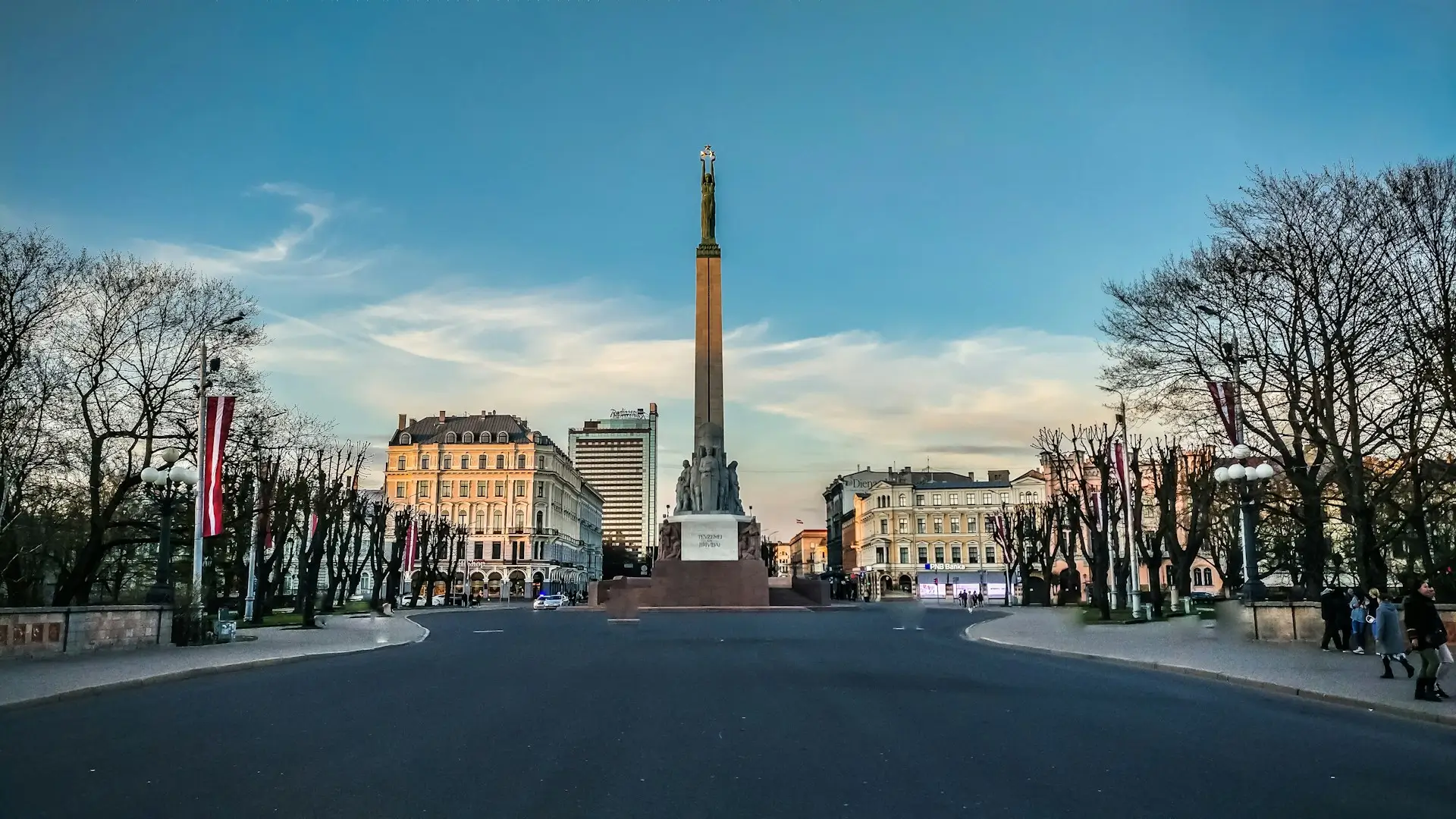
Riga
Time Zone in Latvia
GMT+2
Important Facts About the Country of Latvia
Introduction to Latvia
Latvia is part of the trio known as the “Baltic States” and is also referred to as Lettland, derived from the “Letts” or Lettish people. It stands as a stable democracy and boasts one of the European Union’s swiftest-growing economies. Between 1940 and 1991, Latvia functioned as a republic within the Soviet Union. However, on August 21, 1991, it declared independence, reinstating the Latvian constitution from 1922. Governed in a unitary manner, the country is segmented into 26 self-governing “rajons” (districts).
What to Know about Latvia’s Geography
Covering an expanse of 64,589 km2, Latvia is flanked by Estonia to the north, Lithuania to the south, Russia to the east, and Belarus to the southeast. Additionally, it has a maritime boundary with Sweden to the west. The predominantly flat terrain showcases a diverse blend of beaches, rivers, lakes, marshes, and forests.
Climate in Latvia
Latvia experiences a temperate climate characterized by four seasons of nearly equal duration. Coastal areas feature cooler summers and milder winters, whereas eastern regions witness warmer summers and colder winters. Springs and autumns are generally mild, with average summer temperatures around 19°C and winter temperatures averaging -6°C.
The Culture of Latvia
Latvia’s cultural tapestry intertwines traditional Latvian and Livonian heritage, reflecting the diverse influences drawn from the nation’s rich historical background.
Religions Observed in Latvia
In terms of religious composition, Latvia exhibits the following distribution: Lutheran 19.6%, Orthodox 15.3%, other Christian 1%, other religions 0.4%, and unspecified religion 63.7%.
Languages Spoken in Latvia
Latvian stands as the exclusive official language in Latvia, belonging to the Baltic branch of the Indo-European language family. Additionally, Russian is commonly spoken in the country.
Latvian Human Resources at a Glance
Employment Law Protections in Latvia
The Constitution of the Republic of Latvia, adopted in 1922, outlines the fundamental rights and freedoms of Latvian citizens in Chapter VIII. This section encompasses labor rights, including provisions against discrimination (Section 91), the freedom of association (Section 102), the right to remuneration (including the minimum wage), and entitlements to weekly holidays and annual paid leave (Section 107).
Upon Latvia regaining independence in 1991, a labor law reform replaced the previous Soviet-era laws. This reform incorporated principles from international and European Union law. The key legal acts introduced were:
- Labor Law (effective since June 1, 2002, with amendments on December 12, 2002)
- Labor Protection Law (effective since January 1, 2002)
- Labor Disputes Law (effective since January 1, 2003)
- Law On Strikes (effective since May 26, 1998, amended on October 16, 2002)
- State Labor Inspection Law (effective since January 1, 2002)
- Law On the Protection of Employees in the Event of Insolvency of Employer (effective since January 1, 2003)
- Law On Employers’ Organizations and their Associations (effective since June 2, 1999)
- Support for Unemployed Persons and Persons Seeking Employment Law (effective since July 1, 2002)
The reform also established the National Tripartite Cooperation Council (NTCC) as a national consultation mechanism between social partners, fostering collaboration among the government, employers’ organizations, and employees’ organizations at the national level to address social and economic development challenges collectively.
Employment Contracts in Latvia
A written and signed employment contract is a prerequisite before the initiation of work. However, post-commencement of employment, a verbal agreement holds the same legal weight as a written employment contract.
The employment contract must be executed in Latvian, or a Latvian language translation must be supplied. The agreement can be either temporary or signed for an indefinite duration.
Latvia's Contract Terms
The employment contract should encompass:
- Names and addresses of both the employer and employee
- Commencement date
- Anticipated duration of employment
- Workplace
- Job description and responsibilities
- Remuneration details and payment frequency
- Working days and hours
- Annual paid leave entitlement
- Termination notice conditions
- Provisions specified in the collective bargaining agreement (if applicable)
Fixed Term Contacts for Latvian Employees
Fixed-term contracts are allowable under specific circumstances, including seasonal work, temporary replacement of an absent employee, irregularly performed temporary tasks, short-term expansion-related work, or urgent projects. Such contracts must explicitly state the termination date or the criteria for considering the agreement expired. For instance, the termination date may coincide with the conclusion of a specific project or task. If no termination date is specified, the employer is obligated to provide written notice of expected termination to the employee at least two weeks in advance.
The maximum permissible duration for a fixed-term employment contract is five years. In the case of seasonal work, fixed-term agreements are capped at 10 months. Although there are no restrictions on having successive fixed-term contracts, a 60-day interval must exist between each contract. Failure to adhere to this buffer renders the subsequent tenure as an extension of the initial fixed-term contract.
Latvia's Guidelines Regarding Probation Period/Trial Period
A probationary period (or trial period) may last for a maximum of three months, subject to mutual agreement between the parties. However, for employees under 18 years of age, a probationary period is not permissible.
Within the probationary period, either the employer or the employee can terminate the employment relationship by providing a three-day notice. It is not obligatory to specify the cause for termination during this period.
Regulations and Rules Regarding Working Hours in Latvia
The length of a weekly rest period in a seven-day period must not be less than 42 consecutive hours.
Latvian Laws Regarding Overtime
The maximum limit for overtime is 144 hours within a four-month span, averaging eight hours over a seven-day period. Typically, both the employer and the employee must mutually agree in writing for overtime work. Compensation for overtime should not be less than 100% of the hourly or daily salary rate, explicitly defined either as an hourly rate for the employee or a predetermined piecework rate based on the quantity of work performed.
Latvian Timesheets
Employers are required to retain employment-related documents, such as employment contracts, payslips, timesheets, and records confirming wage payments, for a duration of two years from the posting date.
Health and Safety in the Workplace
A night worker possesses the entitlement to undergo a health examination prior to engaging in night work. Additionally, they retain the right to undergo subsequent regular health assessments, occurring at least once every two years. For employees aged 50 and above, this frequency increases to at least once a year. The associated costs for these medical evaluations are the responsibility of the employer.
To ensure the suitability of a candidate for a specific role, the employer is authorized to request the candidate to undergo a health examination.
Rules Regarding Bonus and 13th Month Pay in Latvia
Although the provision of a 13th-month salary payment is not obligatory, it is frequently observed for employers to include this payment on an annual basis.
Termination
Both the employee and employer possess the right to terminate the employment agreement. The party initiating termination is required to provide the other party with written notice of one month.
In the case of employer-initiated termination, it can be executed for the following reasons:
- Incompetence and inability of the employee to fulfill assigned duties.
- Inability of the employee to perform work due to health reasons.
- Reinstatement of a previously performing employee.
- Economic or organizational restructuring leading to workforce reduction.
- Liquidation of the employer’s entity.
Immediate termination of the employment agreement is permitted if:
- The employee breaches the terms of the employment contract or working procedures.
- The employee engages in unlawful activities or violates labor protection regulations, posing a threat to personal safety or the safety of others.
Termination for certain protected employees (such as pregnant, recently postpartum, or breastfeeding employees) is only permissible under limited circumstances.
The employer is obligated to notify the employee in writing of the circumstances justifying termination, referencing the specific provisions in the employment contract.
Moreover, an employer is prohibited from issuing a termination notice to an employee who is a member of a trade union without obtaining prior consent from the relevant trade union.
Latvia's Requirements Regarding Notice Periods
Either the employer or the employee holds the right to conclude a labor contract termination, necessitating a one-month notice, unless an alternative notice period is stipulated in the employment contract or the collective bargaining agreement. In such instances, the party desiring to terminate the collaboration is required to furnish written notice. Alternatively, both parties have the option to reach a mutual agreement to conclude the employment relationship.
Redundancy/Severance Pay in Latvia
Severance payment requirements are contingent upon the duration of employment, as outlined below, with a cap of four months’ average wage:
- Less than 5 years: One-month average earnings
- 5-10 years: Two months’ average earnings
- 10-20 years: Three months’ average earnings
- Over 20 years: Four months’ average earnings
Post-Termination Restraints / Restrictive Covenants
Compensation is a prerequisite for enforcing non-competition covenants, requiring a written agreement. Such restrictive covenants are valid only when aimed at safeguarding the employer’s commercial interests, with a maximum duration of three years. Confidentiality restrictions, however, do not mandate compensation under legal obligations.
Trade Unions / Collective Agreements in Latvia
The Law on Trade Unions affirms the right of Latvian residents to establish trade unions, allowing both employers and employees to join such entities. An individual’s affiliation with a trade union cannot be grounds for an employer to reject entering into an employment contract. Without prior approval from the trade union, an employer is prohibited from unilaterally terminating an individual labor agreement with a union member.
Tax and Social Security Information for Employers in Latvia
Personal Income Tax in Latvia
| Income Band (EUR) | Tax Rate % |
|---|---|
| <20,004 | 20.0 |
| 20,005 – 78,100 | 23.0 |
| >78,100 | 31.0 |
Employees receiving severance payments are subject to a 25% personal income tax in Latvia. These tax rates are applicable to all residents, encompassing individuals who have declared Latvia as their country of residence, those residing in Latvia for 183 days or more in a single year, and Latvian citizens employed abroad by an employer registered in the Republic of Latvia.
Social Security in Latvia
Monthly National Social Insurance Contributions (NSIC) are remitted by both employees and employers to the State Social Insurance Agency (VSAA) in Latvia. These contributions ensure coverage for employees in health insurance, pensions, unemployment insurance, as well as maternity, paternity, and parental leave. The employee rate is 10.5%, and for the employer, it is 23.59%.
For the fiscal year 2023, the income cap attracting NSIC is set at EUR 78,100. A minimum NSIC has been established for those earning the minimum wage (EUR 620 for 2023). If an individual’s income from all NSIC taxable sources falls below this threshold, the employer is responsible for making the contributions on the employee’s behalf.
Employees earning more than EUR 78,100 annually are also required to contribute to a Solidarity Tax (ST). The ST rates mirror those of social security contributions, with an additional 23.59% from the employer and 10.5% from the employee. However, employers are eligible for reimbursement as the effective ST rate is 25%, with refunds expected by September 2023.
The distribution of the ST paid is as follows:
- 1% to healthcare services (0.5% from the employer and 0.5% from the employee)
- 10% to Personal Income Tax (PIT)
The remaining portion is allocated to a special budget for state pensions.
Note: The provided rates serve as a general guideline, and the actual rates charged by GoGlobal may vary.
Important Information for Latvian Employees
Salary Payment
An employer is obligated to disburse remuneration on a bi-monthly basis, unless there is a mutually agreed-upon alternative arrangement between the employer and the employee. Payment must be made in the local currency (EUR) and traditionally in cash, although non-cash transactions are permissible if specifically agreed upon by both parties.
Payslip
The payslip should comprehensively outline the remuneration calculation, inclusive of taxes and deductions for mandatory social insurance contributions. It must also provide a breakdown of hours worked during overtime, at night, or on public holidays.
Annual Leave
After six months of uninterrupted employment, employees are entitled to four weeks of annual leave, equivalent to 20 working days, excluding public holidays. For individuals under the age of 18, the duration extends to one month. The annual leave can be divided into segments, but at least one period must consist of a minimum of two consecutive calendar weeks. With the employee’s agreement, a maximum of two weeks from the current year’s leave can be carried forward to the subsequent year.
Sick Leave
Employers are required to compensate their employees during sick leave according to the following rates:
- Day 2-3: 75% of average earnings
- Day 4-10: 80% of average earnings
- Day 11 – 52 weeks of absence: Typically, the employee’s mandatory health insurance covers 80% of the average pay, as calculated for social insurance contributions.
*Starting from April 2022, the employer’s responsibility for paid sick leave will be limited to nine calendar days (instead of the current 10 calendar days), with state benefits becoming payable from Day 10 onwards.
Maternity & Parental Leave
Maternity Leave
Expectant employees are entitled to a total of 112 days of maternity leave, divided into 56 days of pre-natal leave and 56 days of post-natal leave. If less than 56 days of pre-natal leave are taken, the remaining period can be utilized for post-natal leave, ensuring the total does not exceed 112 days. In case of complications during pregnancy, childbirth, or multiple births, an additional 14 days of supplementary maternity leave are granted.
Paternity Leave
Fathers are entitled to 10 days of paternity leave to be taken within the initial two months after the child’s birth. Supplementary paternity leave, extending up to 70 days, can be granted under specific circumstances, such as the death or illness of the mother.
Parental Leave
Parents can avail themselves of up to 18 months of parental leave until the child turns eight years old. This leave can be taken consecutively or in parts, with the employee required to provide written notice to the employer at least one month prior to the commencement, specifying the duration.
Adoption Leave
One adoptive parent of a child up to 18 years old is entitled to 10 days of adoption leave.
Nursing Care Leave
Employees with a child under 18 months old can take additional breaks for feeding, with each break lasting at least 30 minutes and occurring every three hours. For employees with two or more children under 18 months, the break must be a minimum of one hour. These feeding breaks can be appended to the end of the working day, effectively reducing the total working hours.
Supplementary Leave
Parents with three or more children under the age of 16, as well as those with a disabled or high-risk child, are granted an annual paid supplementary leave of three working days.
The law also provides for adoption leave of 12 weeks for women adopting a child under three months old. A commissioning mother, who provides her egg for embryo implantation in another woman, is entitled to 12 weeks of leave from the date the child is handed over to her. The woman giving birth, known as the host or surrogate mother, is not eligible for this leave.
Employers are required to inform female workers of their rights under the Act at the time of appointment, both in writing and electronically.
While paternity leave is offered to government employees, it is not mandated in the private sector, and its provision is at the discretion of the employer.
Public Holidays
Latvia observes 13 public holidays annually.
Benefits to the Employee in Latvia
Latvian Statutory Benefits
The pension system in Latvia is overseen by the State Social Insurance Agency (SSIA), structured into a three-tier system:
- First-tier: state-mandated unfunded pension scheme
- Second-tier: state-funded pension scheme
- Third-tier: private voluntary pension scheme
The size of an employee’s pension is directly linked to the amount of contributions made, and a sickness benefit at 80% of the beneficiary’s average wage is provided when social insurance contributions have been made for a minimum of three months in the last six months (or no less than six months in the last 24 months).
Other Benefits
Beyond the legally mandated benefits, employees frequently receive customary contractual perks, including:
- extended annual paid leave
- variable pay clauses (bonuses tied to
- personal or company performance)
- company-provided phone
- health and life insurance
- paid parking
Rules Regarding Visas and Foreign Workers in Latvia
General Information
Individuals who are not citizens of the European Economic Area (EEA), the EU, or the Swiss Confederation need a residence permit and work visa to initiate employment, with some exceptions.
The immigration process is initiated by the employer, who submits the candidate’s information to the Office of Citizenship and Migration Affairs in Latvia. The candidate can then apply for the permit either at the Latvian Embassy in their home country or directly at the Office of Citizenship and Migration Affairs in Latvia, the government agency responsible for issuing residence permits with employment rights.
For nationals of the European Economic Area (EEA), the EU, or the Swiss Confederation staying in Latvia for more than three months, obtaining a registration card is mandatory, with certain exceptions.
Public Holidays Recognized by Latvia in 2024
| Occasion | Date | |
|---|---|---|
| 1 | New Year’s Day | January 1 |
| 2 | Good Friday | March 29 |
| 3 | Easter Monday | April 1 |
| 4 | Labour Day | May 1 |
| 5 | Independence Restoration Day | May 4 |
| 6 | Midsummer Night’s Eve | June 23 |
| 7 | St. John’s Day | June 24 |
| 8 | Independence Day | November 18 |
| 9 | Christmas Eve | December 24 |
| 10 | Christmas Day | December 25 |
| 11 | Second Day of Christmas | December 26 |
| 12 | New Year’s Eve | December 31 |
Hire New Talent in Latvia
Our global hiring services enable you to onboard personnel in any country without the financial commitment required to establish a local entity.