

Hire in Hungary
Begin your journey into human resources best practices and recruitment in Hungary right here.

Hungarian Currency
Hungarian Forint (HUF)

The Capital of Hungary
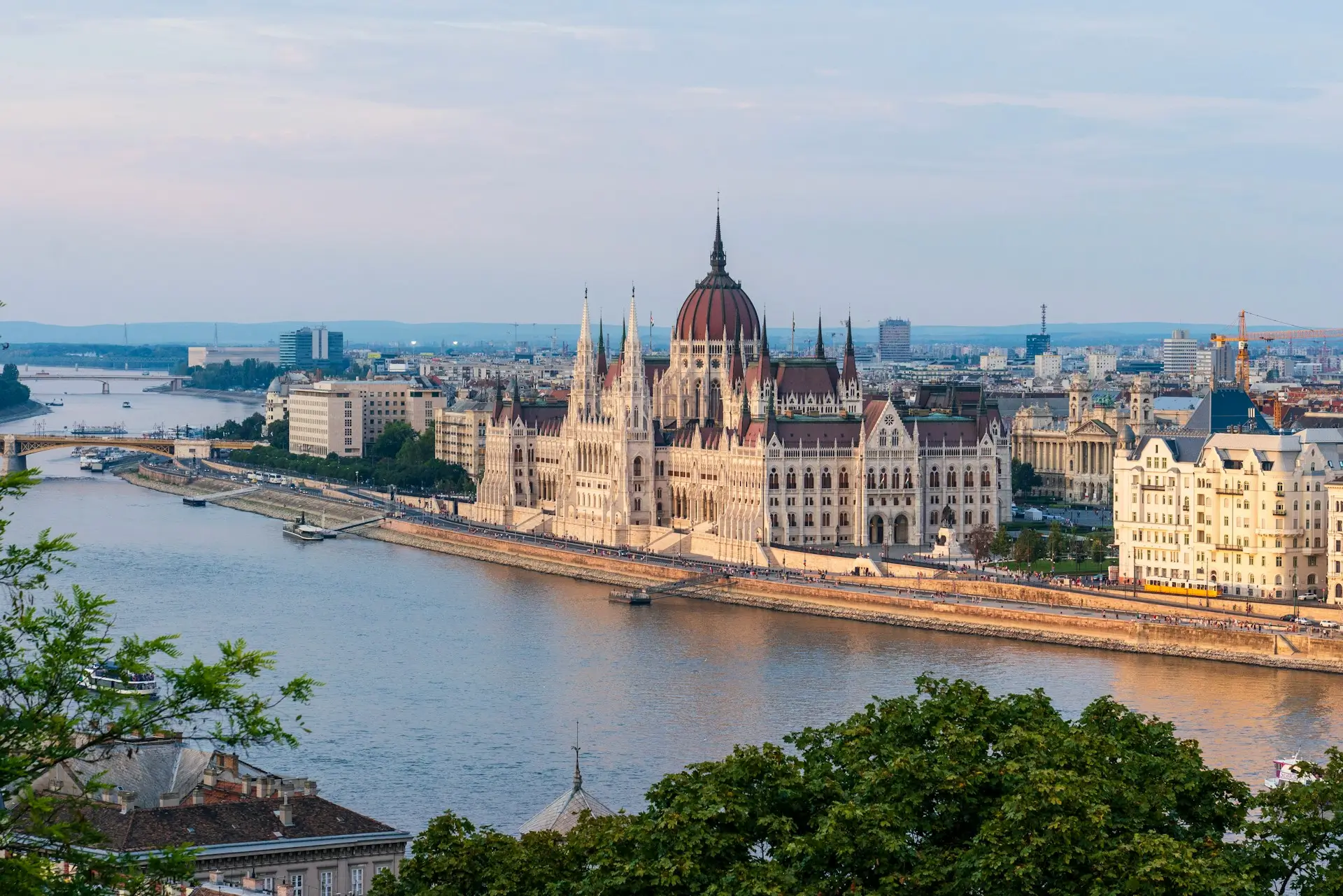
Budapest
Time Zone in Hungary
GMT+1
Important Facts About the Country of Hungary
Introduction to Hungary
Hungary is a unitary, parliamentary, representative democratic republic boasting a population of 10 million individuals. The capital, Budapest, stands as both the largest and most populous city. Hungarians identify their nation as part of Central Europe, distinguishing it from Eastern Europe. The term “Central-Eastern Europe” is also considered suitable in this context.
What to Know about Hungary’s Geography
Covering 93,000 square kilometers, Hungary is a landlocked country. It borders Slovakia to the north, Ukraine to the northeast, Romania to the east, Serbia and Croatia to the south, Slovenia to the southwest, and Austria to the west.
Climate in Hungary
Hungary experiences a characteristic European continental-influenced climate, featuring warm, dry summers and relatively cold winters.
The Culture of Hungary
Hungarians hold heritage and tradition in high regard, evident in the nation’s national celebrations, folk music, dance, and strong familial bonds that transcend generations. The people are vibrant, friendly, and prioritize family above all else, with hospitality playing a significant role in their culture.
Religions Observed in Hungary
Hungarians hold heritage and tradition in high regard, evident in the nation’s national celebrations, folk music, dance, and strong familial bonds that transcend generations. The people are vibrant, friendly, and prioritize family above all else, with hospitality playing a significant role in their culture.
Languages Spoken in Hungary
Hungarian is the official language of Hungary.
Hungarian Human Resources at a Glance
Personal Income Tax in Netherlands
Hungary’s employment relations are regulated by the Labor Code, Act I of 2012, along with other labor laws, collective bargaining agreements, and individual employment contracts. The Labor Code presides over various aspects of employment, including working hours, holidays, rest periods, wages, overtime, and employment relationships. The country’s Constitution serves as a crucial legal foundation, safeguarding the fundamental rights of both employers and employees.
In the realm of labor disputes in Hungary, the courts typically uphold employees’ rights by interpreting the provisions of the Labor Code, collective bargaining agreements, and employment contracts, often favoring employees.
Employment Contracts in Hungary
- According to the Labor Code, employment contracts must be formally documented, a responsibility that falls upon the employer. Failure to conclude an employment contract in writing allows the employee to declare its invalidity within thirty days of commencing work. It is essential that the terms of the employment contract align with the collective bargaining agreement, unless the contract specifies more favorable conditions for the employee.
- In the employment contract, it is imperative to explicitly define the employee’s base salary, job position, the duration of employment (whether fixed-term or indefinite), and the designated place of work.
- Apart from the employment contract, the employer is required to furnish the employee with comprehensive written information about the terms of employment within seven days of the commencement of the employment relationship. This information encompasses details like the start and duration of employment, workplace location, scheduled workdays, potential overtime duration, specific nature of the employer’s activities, termination rules, training policies, allocated time for employee training, and the authority to which the employer remits employment-related taxes, among other relevant particulars.
Hungary's Contract Terms
In Hungary, the standard practice is to establish employment contracts for an indefinite duration, although fixed-term contracts are permissible for temporary or seasonal work.
According to the labor code, employees have the right to request a transfer to full-time or part-time employment, teleworking, or indefinite-term employment after the initial 6 months of employment. This request should be made in writing, along with providing reasons. The employer is obligated to respond in writing within 15 days. If the request is denied, the employer must furnish clear, truthful, and well-founded reasons for the decision.
Hungary's Guidelines Regarding Probation Period/Trial Period
Upon the conclusion of an employment contract, a probationary period may be mutually agreed upon by the employer and the employee, subject to the following provisions:
- The legal maximum duration of the probationary period is three months.
- A probationary period shorter than three months can be prolonged once, but the total duration, including the extension, must not exceed three months.
- A collective bargaining agreement may specify a probationary period of six months.
- The extension of the stipulated probationary periods is strictly prohibited and considered null and void.
- During the probationary period, either party has the right to terminate the employment relationship immediately and without providing justification.
- For fixed-term employment contracts lasting no more than 12 months, the probationary period is determined proportionally.
In the event of extending a fixed-term employment contract or reinstating the same or a similar position within six months of terminating the fixed-term contract, a probationary period cannot be imposed.
Regulations and Rules Regarding Working Hours in Hungary
The standard legal limit for a regular workday is eight hours, constituting a typical workweek of 40 hours. However, employers and employees have the flexibility to mutually agree upon shorter daily and weekly working hours. Additional regulations pertain to rest breaks and intervals between working days. For instance, employees are entitled to a weekly rest period, which includes two days off or a continuous 48-hour rest period.
Hungarian Laws Regarding Overtime
Under exceptional circumstances, employees may be compelled to engage in overtime, referred to as “extraordinary work” according to the terms defined in the Labor Code. Even if the employer mandates such work, the duration cannot surpass 12 hours per day and 48 hours per week. The annual limit for extraordinary work is capped at 250 hours, with the possibility of an increase to 300 hours per year through a collective bargaining agreement.
Upon the mutual agreement in writing between the employer and employees, the employer may enforce an additional 150 hours of overtime annually, or 100 hours if the annual maximum overtime limit is already elevated to 300 hours through a collective agreement.
The law strictly delineates the situations under which extraordinary work can be mandated. Employees may be required to engage in extraordinary work only under justified and unforeseen extraordinary circumstances, which include:
- Extraordinary work on public holidays is permissible only if the employee is otherwise subject to work on such days.
- Extraordinary work can also be ordered in the interest of preventing or mitigating imminent dangers, accidents, natural disasters, serious damage, or threats to life, health, or physical integrity.
- Extraordinary work cannot be mandated if it poses a risk to the physical integrity or health of the employee or if it imposes an unreasonable burden on the employee considering their personal, family, or other circumstances.
- Pregnant women cannot be compelled to perform extraordinary work from the date of the pregnancy diagnosis until the child reaches the age of three. This provision also applies to single parents caring for their children, up to the time when the child reaches the age of three.
For overtime exceeding regular daily working hours, an employee is eligible for a wage supplement equal to 50% of their base salary. Additionally, a wage supplement must be provided for any “extraordinary” work conducted on weekly rest days or public holidays, amounting to 50% along with a day off, or 100%.
Health & Safety in Workplace
Employers must furnish employees with comprehensive training on health and safety regulations. This training is imperative at the commencement of employment and should be recurrently administered throughout their tenure. This proactive approach enables employers to guarantee that their workforce possesses the requisite qualifications and skills for safe work practices, thereby minimizing the risk of workplace accidents or injuries. It encompasses equipping employees with ample understanding of the regulations and rules governing health and safety at the workplace.
Health Checks
Each employee is required to undergo an initial medical assessment before commencing work, followed by regular annual check-ups thereafter.
Rules Regarding Bonus and 13th Month Pay in Hungary
In Hungary, the provision of a 13th-month bonus is not obligatory, but performance-based bonuses are commonly practiced. Employers have the discretion to award bonuses (premiums) to employees in addition to their regular salary. Typically, this bonus is appended to a fixed salary. The decision to grant a bonus lies within the sole discretion of the employer and is not a claimable right by the employee, as long as both parties have agreed upon such terms and the employer explicitly reserved the right.
If the employer prefers a discretionary bonus system, the governing document should stipulate the possibility that the employer may, at its sole discretion and intermittently, provide bonuses to employees in addition to their salaries. This document should clarify that the employer retains the right to retract the bonus or modify its terms.
However, if a bonus is explicitly promised in advance to an employee for completing a specific task, the employee has the right to claim it. The terms and conditions of such a bonus can be outlined either in the employment contract or a separate bonus policy.
Termination
Notice-based termination is applicable in cases of indefinite-term employment, whereas in fixed-term employment, it is less frequently employed. Regardless of the employment term, all employees in Hungary are safeguarded against unfair and unlawful termination.
In the context of indefinite-term employment, termination is only allowed based on:
- The employee’s performance
- The employee’s behavior related to the employment
- The operations of the employer
In the case of fixed-term employment, the employer may terminate the employment by notice only under the following circumstances:
- The employer is undergoing liquidation or bankruptcy proceedings.
- Employment is terminated due to reasons related to an employee’s performance.
- The employment becomes no longer feasible due to an unavoidable external reason.
Restricted or prohibited terminations: The Hungarian Labor Code imposes additional restrictions on terminating the employment of specific groups of employees. In the following instances, an employer is prohibited from terminating employment by notice (although termination by mutual agreement is allowed during these periods):
- Pregnant employees
- Employees on maternity leave
- Employees on unpaid leave for nursing a child
- Employees on reserve military service
- Women undergoing treatment related to a human reproduction procedure (for up to six months from the beginning of such treatment)
Mass layoff regulations – The termination of a substantial number of employees resulting from a modification in the employer’s operations is categorized as a mass layoff. This is governed by specific provisions and consultation rules.
Dismissal without notice – An employer or an employee has the authority to terminate an employment relationship without notice if the other party engages in either of the following:
- Willful or gross negligence leading to a serious violation of substantive obligations related to the employment relationship.
- Conduct that renders the employment relationship impossible.
Unjust termination – In the event of a court ruling that deems a termination as unlawful, the employer is required to compensate the employee for damages.
- The lost salary will be included in the damages, with a maximum limit set at 12 months’ worth of the “absence fee.”
- Any earnings acquired by the employee post-termination must be subtracted.
- Reinstatement is a potential remedy, applicable only in specific cases where the breach is deemed significant, such as a violation of termination protection.
Upon concluding the employment relationship, the employer is obligated to settle all outstanding wages to the employee by the third working day following the termination date.
Hungary's Requirements Regarding Notice Periods
In the event of termination with notice, the employment relationship concludes at the conclusion of a notice period. This period is stipulated to be a minimum of 30 days and a maximum of six months, depending on the employee’s length of service or as agreed upon by the parties involved. If the employer initiates the termination, the thirty-day notice period will be extended:
- By five days after three years
- By fifteen days after five years
- By twenty days after eight years
- By twenty-five days after ten years
- By thirty days after fifteen years
- By forty days after eighteen years
- By sixty days after twenty years of employment with the employer.
The notice period for the termination of a fixed-term employment relationship must not extend beyond the fixed term.
In cases where the employer issues a unilateral termination notice during an employee’s sick leave, the notice period will only commence upon the employee’s return to work and the conclusion of the one-year sick pay period.
Post-Termination Restraints/ Restrictive Covenants
Post-termination restraints are a prevalent practice in Hungary, particularly for employees in senior positions. The primary aim is to safeguard the employer’s economic interests during a specified period following termination. Such agreements should be customized for individual employees.
Non-compete clauses – Permissible for a maximum of two years, provided they are expressly stated in the parties’ agreement, reasonable in geographical reach and scope, and the employer offers adequate compensation in return. This compensation must be equivalent to at least one-third of the employee’s salary.
Customer non-solicitation clauses – Acceptable if included in the parties’ agreement. Compensation is required, but as separate compensation is not mandated for each distinct type of covenant, the compensation for a non-compete will also cover a customer non-solicitation covenant.
Employee non-solicitation clauses – Permissible if included in the parties’ agreement. Compensation is obligatory, and similar to other restraints, separate compensation is not needed for each unique type of covenant; compensation for a non-compete also encompasses an employee non-solicitation covenant.
Redundancy/Severance Pay in Hungary
- In the event of termination by notice due to business operational reasons, employees with a minimum of three years of service are eligible for severance payment.
- The severance pay is calculated based on the employee’s length of service, ranging from a minimum of one month’s pay to a maximum of six months’ “absence fee.” The employment contract may specify a higher severance amount.
- If the termination occurs within five years before the employee qualifies for an old-age pension, the severance payment must be augmented by an additional one to three months’ “absence fee,” depending on the employee’s years of service.
- No severance payment is applicable if the termination is attributed to the employee’s behavior or capability. Similarly, no payment is mandated if the employee has already become entitled to a pension.
Hungarian Timesheets
In 2019, the European Court of Justice mandated that companies establish a mechanism to document the working hours of their employees. Consequently, employers are required to institute an objective, trustworthy, and easily accessible system that enables the tracking of the daily work hours completed by each employee.
Trade Unions/ Collective Agreements in Hungary
Collective bargaining agreements are commonly established at the company level, with some industry-wide agreements also in effect. Currently, there are approximately 2,100 company-level collective bargaining agreements and 5,000 collective bargaining agreements overall in Hungary, including those applicable in the public sector.
Trade unions possess the right to request information from employers regarding employee interests and can initiate consultations with employers. Members of trade unions are permitted to use working time allowances for their activities and are safeguarded against termination by notice from employers, requiring approval from the higher trade body instead. Exclusive authority to enter into collective bargaining agreements rests with trade unions.
Works Councils – As per the Labor Code, a works council must be elected at all independent sites of an employer where the employee count exceeds 50. If the total number of employees (either overall or at any independent division) is less than 51 but exceeds 15, the election of a works council is not mandatory. However, in such cases, a works representative is elected by the employees. The rights and obligations stipulated in the Labor Code for a works council apply equally to the works representative. Both the works council and the works representative are elected for a five-year term.
Fixed Term Contacts for Hungarian Employees
Employers and employees have the option to mutually agree upon a fixed-term employment arrangement. The duration of such a fixed-term employment relationship is capped at five years, except for executive employees. When determining the total term of a fixed-term contract, the duration of a prior fixed-term relationship (terminated within six months preceding the start of the new fixed-term employment) must be aggregated.
Renewal or extension of a fixed-term employment relationship between the same parties is permissible only if the rightful interests of the employer warrant such a decision. Importantly, this should not be aimed at compromising the rightful interests of the employee.
Tax and Social Security Information for Employers in Hungary
Personal Income Tax in Hungary
Income from employment in Hungary is subject to taxation. The standard personal income tax rate is a flat 15% of the taxable gross income.
Mothers who have raised four or more children are eligible for a lifelong exemption from personal income tax (PIT).
Social Security in Hungary
Hungarian employers are obligated to remit the following taxes and contributions based on the gross salaries of their employees in the year 2023:
| Contribution | Employee (%) | Employer (%) |
|---|---|---|
| Social contribution tax | – | 13.0 |
| Pension contribution | 10.0 | – |
| Social security contribution | 7.0 | – |
| Employment contribution | 1.5 | – |
*The rates mentioned above are indicative and are intended as a general reference. The actual rates levied by GoGlobal may vary.
Important Information for Hungarian Employees
Salary Payment
Unless otherwise stipulated by law, the base salary must be established and disbursed in Hungarian Forints, typically in a single monthly payment in arrears. The payment should be completed by the tenth day of the month following the relevant month, facilitated through either bank transfer or cash.
Under the Labor Code, three distinct arrangements govern the structuring of an employee’s salary:
-
Fixed (time-based) Salary: Employees may receive a fixed salary, such as monthly or weekly, unrelated to their individual performance or the company’s overall performance.
-
Performance-Related Salary: An employee’s salary may be tied to their performance, necessitating the pre-establishment of performance requirements and factors for calculating the performance-related salary. These parameters should be outlined through a procedure incorporating objective criteria, ensuring feasibility. If an employee is on a performance-related salary, a guaranteed salary must be defined and paid, constituting at least half of the base salary. The determination of meeting performance requirements must be objective, avoiding arbitrary employer discretion.
-
Combination of Fixed and Performance-Related Salary: An employee’s salary can be structured as a combination of fixed and performance-related components, as detailed above.
Employers in Hungary are mandated to deduct income tax and social security contributions from employees’ salaries, remitting them to the relevant authorities.
Payslip
- Employees are entitled to receive a comprehensive written salary statement, and electronic statements provided online are deemed acceptable. Deductions from the salary are permissible only in accordance with legal provisions, enforceable decisions, or the explicit consent of the employee.
- The salary slip must transparently display the employee’s gross pay, the deducted amounts for tax and social security contributions, and the net salary paid.
- Employers are obligated to furnish employees with a tax certificate detailing payments and deductions, as this is essential for the employees’ tax returns.
Annual Leave
The allotted basic holiday leave is 20 days per year, with incremental enhancements based on the employee’s age, reaching up to 30 days for employees aged 45 and above:
- One working day additional for ages over twenty-five
- Two working days additional for ages over twenty-eight
- Three working days additional for ages over thirty-one
- Four working days additional for ages over thirty-three
- Five working days additional for ages over thirty-five
- Six working days additional for ages over thirty-seven
- Seven working days additional for ages over thirty-nine
- Eight working days additional for ages over forty-one
- Nine working days additional for ages over forty-three
- Ten working days additional for ages over forty-five
Carry Over Rules – Employees are required to utilize the statutory amount of leave within the holiday year. Only any extra days granted additionally can be carried over, but they must be utilized within one year.
Sick Leave
Employees are granted 15 days of sick leave annually, during which they receive 70% of their salary as an “absence fee,” wholly covered by the employer. Subsequent to the initial 15 days of sick leave within a calendar year, the employee is eligible for sick pay, typically amounting to 60% of their salary, with a maximum duration of one year. The government’s social security authority assumes two-thirds of the sick pay, while the remaining one-third is contributed by the employer.
A certified doctor must verify the incapacity to work, and the employee is required to furnish this certificate to the employer.
Compassionate & Bereavement Leave
- In the event of the death of a close relative, they are entitled to at least two paid working days per occurrence.
- If the employee is unable to attend work due to personal or family reasons or circumstances beyond their control.
Other Right for Leave of Absence
- During the performance of civic duties.
- In case of incapacity to work due to illness.
- Throughout mandatory medical examinations, including pregnancy tests, with compensation.
- While serving as a volunteer firefighter.
- During the absence for blood donation (minimum four hours) with “absence pay.”
- During classes if employees are pursuing elementary school studies or during training by mutual agreement with the employer, with compensation.
- For the necessary duration to attend any court or authority-ordered appearance.
- During treatment related to a human reproduction procedure.
Maternity & Parental Leave
The Hungarian Labor Code outlines several family-friendly rights:
- Maternity leave spans 24 weeks during the pregnancy period and after childbirth, with a maximum of four weeks to be taken before the planned date of childbirth. Eligible employees receive 70% of their average salary during this period, covered by the social security system.
- Parental leave without pay is available until the child reaches the age of 3 (extended in the case of disabled or sick children). During this period, employees receive childcare pay from the social security system, amounting to 70% of the average salary until the child turns 2, followed by the minimum amount of old-age pension until the child reaches 3.
- Additional holidays are granted to parents.
- Protections against termination of employment are in place during pregnancy and maternity leave.
- Night work is prohibited during pregnancy and until the child reaches three years of age.
- Unpaid leave for nursing a relative is an option.
- There are restrictions against assigning an employee to another workplace, job, or employer during pregnancy and until the child reaches three years of age. For single parents, this provision extends until the child turns 16, and it applies if the employee is the permanent caregiver of a relative.
- Mothers are allowed to modify their job title until the child reaches one year of age to adjust their work duties according to their health conditions.
- Employers must accommodate a mother’s request for part-time employment until the child reaches three years of age.
Paternity leave
Upon the birth of their child, a father is granted 10 days of paid leave. During this period, the employee is entitled to receive full absentee pay for the first 5 working days and 40% of the absentee pay from the 6th working day of the leave.
Adoption leave
A woman who has been awarded custody of a child for adoption is also entitled to maternity leave. The duration of this leave is 24 weeks, and it is unpaid.
Parental leave
Employees with a minimum of one continuous year of employment with their employer are entitled to 44 working days of parental leave until a child reaches 3 years of age. During parental leave, the employee is entitled to receive 10% of the absence fee, from which certain social security benefits, such as childcare allowance, may be deducted.
Carer’s leave
Employees are granted five days of carer’s leave each year to provide care for a relative or a person residing in the same household with serious health needs. This leave is unpaid.
Public Holidays
- Hungary observes 11 public holidays, granting employees the day off.
- In the event that a public holiday coincides with a weekend, there is no adjustment for employees following a Monday through Friday work schedule.
- Public holiday Sundays in Hungary are handled distinctively compared to regular Sundays. During public holiday Sundays, shops are generally closed. If an employer mandates employees to work on these occasions, distinct wage supplements will be applicable.
- In Hungary, there is a preference for extended weekends over single rest days during the week. If a public holiday occurs on, say, a Thursday, the subsequent day is designated as a ‘rest day,’ creating a four-day extended weekend. To balance the yearly workdays, a Saturday may be designated as a workday in exchange for the additional ‘rest day.’
- Apart from public holidays and rest days in Hungary, there are also designated “short” days. On these occasions, employees have the option to leave work early, shops typically close around noon, and public transportation transitions to night mode in the afternoon. These special days include December 24th (Christmas Eve) and December 31st (New Year’s Eve).
Benefits to the Employee in Hungary
Hungarian Statutory Benefits
Employees with extended periods of continuous employment may qualify for specific statutory benefits, including:
- Extended notice periods
- Severance payments with increased amounts
- Entitlement to sick pay or elevated levels of sick pay
- Extended durations for sick pay eligibility
Other Benefits
In specific instances, employers have the option to provide fringe benefits to their employees through two distinct methods:
- Fixed: A uniform benefit is offered to every employee, such as a monthly HUF 10,000 food voucher for each individual.
- Optional: Employers can select benefits from a predefined list within specified limits. This flexible approach is commonly referred to as the “cafeteria scheme.”
Common benefits in Hungary typically encompass:
- Vouchers, including the ‘Erzsébet’ voucher for food support, school vouchers, culture vouchers, and gift vouchers, are provided as common benefits in Hungary.
- SZÉP Card features three distinct “compartments,” each designated for funding various expenses at establishments that accept the card, such as restaurant meals, accommodation, cultural activities, and more.
- Season pass for local public transportation
- Healthcare funding card
- Optional contributions to a pension fund
Rules Regarding Visas and Foreign Workers in Hungary
General Information
Visa requirements:
Individuals from the European Economic Area (EEA) and Switzerland possess the privilege to work in Hungary without the necessity of a visa or work permit. Employers are required to register their EU/EEA/Swiss employees with the local employment authority.
Non-EU family members are not obligated to secure a visa if they possess a residence card issued to a family member who is an EU national.
The Ministry of Foreign Affairs and Trade in Hungary is responsible for handling visa-related matters.
Individuals from non-EU countries, commonly referred to as “third-country nationals,” are required to acquire both a work visa and a work permit to reside and work in Hungary.
Typically, the employer takes care of the bureaucratic aspects of a visa application, being responsible for submitting various documents to the immigration authorities. This documentation encompasses proof of qualifications and health certification.
Criteria for securing a work visa during the application process:
- A current and valid work permit
- An active labor agreement
- Verification of accommodation
The work permit and corresponding working visa are granted for a duration of two years. Renewal is possible if the employee chooses to prolong their stay in Hungary and remains compliant with the application prerequisites.
Work permit
The application process spans a duration of up to 25 days and involves the following steps:
-
A workforce demand is essential. The hiring company must advertise the job at the Hungarian Labor Office (‘Munkaügyi Központ’) for a fixed 15-day period, providing an opportunity for unemployed Hungarian citizens to apply for the position.
-
If, after the 15-day period, the employer is unable to fill the vacancies with Hungarian employees, they can proceed to apply for the work permit on behalf of the employee. The work permit is typically ready within an additional 10 to 15 days.
-
An individual work permit can be granted for a maximum period of two years, with the option for unlimited renewals.
-
Once granted a work permit, the employee can personally apply for the working visa at the Hungarian Consulate (‘Magyar Konzulátus’) in their home country or in the country where they currently hold legal residence.
-
Exceptions to the work permit requirement (‘munkavállalási engedély’) may apply for executive employees and academic staff.
-
Work and residence permits are issued by the local public employment services (‘Regionális Foglalkoztatási Szolgálat’) and immigration offices (‘Bevándorlási Hivatal’) at the future employer’s location. The work permit is incidental to a residence permit.
-
Obtaining the work permit is free of charge, but the employee is responsible for covering the costs associated with officially translating the documents to verify their qualifications.
Residence permit
In Hungary, the Ministry of the Interior and the National Directorate-General for Aliens Policing, along with its regional directorates, oversee matters pertaining to residence:
- EU nationals and their family members have the right to stay in Hungary for more than three months if engaged in active, paid employment, pursuing studies, or supporting themselves and their family through personal funds, which also includes comprehensive healthcare coverage.
- After legally and continuously residing in Hungary for five years, EU nationals and their family members are eligible for permanent residence and will be issued a corresponding permit.
- Third-country citizens must obtain a residence permit for employment purposes before commencing work in Hungary.
Public Holidays Recognized by Hungary in 2024
| Occasion | Date | |
|---|---|---|
| 1 | New Year’s Day | January 1 |
| 2 | Revolution Day | March 15 |
| 3 | Good Friday | March 29 |
| 4 | Easter Monday | April 1 |
| 5 | Labour Day | May 1 |
| 6 | Whit Monday | May 20 |
| 7 | Saint Stephen’s Day | August 20 |
| 8 | Republic Day | October 23 |
| 9 | All Saints’ Day | November 1 |
| 10 | Christmas Day | December 25 |
| 11 | Second Day of Christmas | December 26 |
Hire New Talent in Hungary
Our global hiring solutions enable you to onboard personnel in any country, eliminating the requirement for substantial investments in establishing a local entity.