

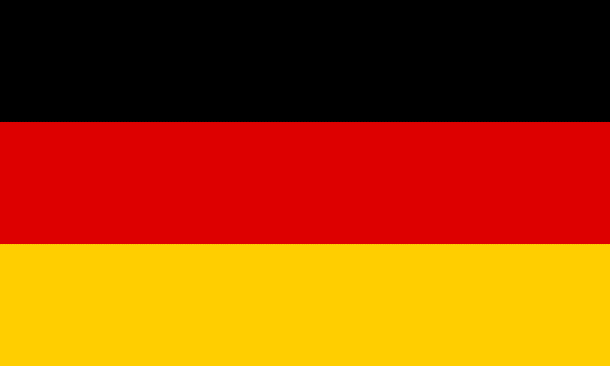
Hire in Germany
Begin your journey into human resources best practices and recruitment in Germany here.

German Currency
Euro (EUR)

The Capital of Germany
Berlin
Time Zone in Germany
GMT+1
Important Facts About the Country of Germany
Introduction to Germany
Germany, officially known as the Federal Republic of Germany, stands as one of the largest countries in Europe. Boasting a population exceeding 83 million, it holds the distinction of being the most populous nation within the European Union (EU). Renowned for its exceptionally skilled workforce and notable innovation levels, the German economy ranks as the fourth-largest in the world by GDP.
What to Know about Germany’s Geography
Situated between the Baltic Sea and the North Sea to the north and the Alps to the south, Germany shares international land borders with nine neighboring countries.
Climate in Germany
Germany experiences a moderate climate without prolonged periods of extreme cold or heat. Coastal areas and Northern Germany exhibit a maritime-influenced climate characterized by warm summers and mild, overcast winters. Inland regions, on the other hand, feature a continental climate with more pronounced seasonal temperature variations, resulting in warmer summers and colder winters.
The Culture of Germany
Renowned for its extensive and vibrant cultural heritage, Germany has played a significant role in shaping European art, music, and intellectual pursuits over the course of history. While Germany has exerted its cultural influence on the neighboring countries, the reciprocal exchange has also contributed to the diverse and dynamic cultural landscape in present-day Germany.
Religions Observed in Germany
The most recent census data reveals that Christianity holds the predominant position as the largest religion in Germany, with slightly over 50% of Germans identifying themselves as Christian. This Christian demographic is fairly evenly divided between Protestantism (mainly Lutheran) and Catholicism. Following Christianity, Islam stands as the second-largest religion, practiced by around 5% of the population. Notably, just under 40% of Germans do not affiliate with any religious belief.
Languages Spoken in Germany
The official and primary spoken language in Germany is German. Turkish, as a language brought by immigrants, is spoken by roughly 2% of the population. English has become a commonly learned second language for most Germans, and fluency in English is particularly prevalent among the younger populations in urban centers such as Berlin and Hamburg.
German Human Resources at a Glance
Employment Law Protections in Germany
In Germany, employment relationships are overseen and governed by:
- Statutory laws
- The employment agreement
- Collective agreements, if applicable, which may include works agreements with the works council or collective bargaining agreements (CBAs) with the union.
Employment Contracts in Germany
The details of employment, encompassing aspects like working hours, compensation, vacation, and benefits, are typically outlined in a written employment agreement. While verbal agreements are permissible, it is advisable to have them in writing, except for fixed-term employment and non-compete obligations, which must be documented. Furthermore, the employer is mandated to furnish a written statement detailing the employment terms to the employee within one month of the commencement of employment. This written statement must include, notably:
- Commencement date of the employment
- Regular work location
- Concise job description
- Salary details, including components of remuneration and payment deadlines
- Working hours
- Break times
- Annual leave entitlement
- Notice period
- Relevant collective agreements
- Termination procedures
Indefinite-term contracts require documentation with a wet signature, which must be obtained before the employee’s start date.
Employment agreements often include additional provisions, such as:
- The ability to assign equivalent tasks as needed
- Confidentiality clauses
- Approval requirements for secondary professional engagements, including non-compete obligations
- Provisions for the return of company assets
- Timeframes for asserting rights related to the employment relationship
Germany's Contract Terms
The terms within an employment contract cannot stipulate conditions that fall below the minimum legal entitlements defined by employment legislation or the relevant collective agreement.
Germany's Guidelines Regarding Probation Period/Trial Period
Probationary periods may extend up to six months. Within this period, both parties retain the right to provide a notice of termination lasting two weeks.
Regulations and Rules Regarding Working Hours in Germany
A standard workweek is deemed to range from 38 to 40 hours, with workdays typically lasting eight hours and not exceeding 10 hours. According to statutory regulations, the maximum average weekly work hours over a six-month period should not surpass 48 hours. Following each workday, there must be an uninterrupted minimum break of 11 hours. Special authorization is necessary for work conducted on Sundays and official holidays in Germany.
German Laws Regarding Overtime
There is no statutory overtime rate; instead, it is determined through contractual agreements. The regulation of overtime is mainly governed by standard contract terms, with the requirement that the agreement is equitable. Any provision that integrates overtime into overall wages must clearly specify the amount of overtime involved.
Rules Regarding Bonus and 13th Month Pay in Germany
Bonuses are prevalent, but it is crucial to exercise caution to guarantee clear and objective language in the contract or any accompanying addenda. For instance, bonus schemes might label bonuses as entirely discretionary. However, in practice, once a bonus is tied to performance in any way, it becomes challenging for the employer to uphold its complete discretion in the eyes of the law.
Germany's Requirements Regarding Notice Periods
|
Length of Employment |
Length of Notice |
| During probationary period | two weeks’ notice at any time |
| After or without probationary period | four weeks’ notice to the 15th of the month or to the end of the calendar month |
| After two years’ service | one month’s notice to the end of the calendar month |
| After five years’ service | two months’ notice to the end of the calendar month |
| After eight years’ service | three months’ notice to the end of the calendar month |
| After ten years’ service | four months’ notice to the end of the calendar month |
| After 12 years’ service | five months’ notice to the end of the calendar month |
| After 15 years’ service | six months’ notice to the end of the calendar month |
| After 20 years’ service | seven months’ notice to the end of the calendar month |
The Employee is obliged to give the Employer the following notice:
| Length of Employment | Length of Notice |
| During probationary period | two weeks’ notice at any time |
| After or without probationary period | four weeks to the 15th of the month or to the end of the calendar month |
Termination
In most cases, the Dismissal Protection Act (“Kündigungsschutzgesetz”) becomes applicable after an employee has been employed for more than six months. According to this act, a termination is only valid for the following reasons:
- Conduct-related (malperformance or misconduct)
- Personal (such as prolonged illness)
- Operational reasons
Certain employee groups receive special protection against termination, including pregnant employees and mothers within four months after childbirth, employees on parental or caregiver leave, severely disabled employees, works council members, and data protection officers.
The termination notice must be provided in writing, signed in ink by an authorized representative of the employer, and does not necessarily need to state the reasons for dismissal. The dismissal letter must be delivered to the employee in its original form. In case of a dispute, the employer is obligated to provide evidence of the proper and timely delivery of the dismissal notification.
Post-Termination Restraints
Written agreements are necessary for any post-termination restraints, and those safeguarding the employer’s legitimate business interests are typically enforceable if deemed reasonable.
- Non-competition clauses are generally limited to six to 12 months, with a statutory maximum of two years. Employers are obligated to provide compensation equivalent to 50% of the employee’s wages during the non-compete period.
- Customer non-solicitation clauses are permissible in specific situations.
- Employee non-solicitation clauses are only enforceable if the restrictions pertain to illegal poaching. Agreements that limit the hiring of employees from a particular business are not legally enforceable.
Severance Pay in Germany
Germany does not have statutory severance pay. A lawful termination results in the conclusion of employment without compensation, except in cases where the dismissal is part of a collective restructuring covered by a social plan agreed upon with the works council. If a dismissal is deemed invalid in Germany, the labor courts may enforce reinstatement unless a settlement is reached. Settlements are customary in Germany, with a general formula granting the employee between 1 and 1.5 times the monthly salary per year of service, and there is no maximum threshold for settlements.
Employers do not have a statutory right to pay employees in lieu of notice. The possibility of garden leave depends on the contractual terms and the merits of the case, balancing the interests of both parties. Garden leave is commonly granted to senior employees in Germany.
Fixed Term Contacts for German Employees
Fixed-term contracts are allowed only for clear and substantive reasons. However, contracts with a duration of two years or less are an exception to this rule. During this period, the maximum number of consecutive fixed-term contracts is four. Both fixed-term contracts and contracts under the ‘AüG’ license must be executed in the original, hard copy, with a wet ink signature.
Tax and Social Security Information for Employers in Germany
Personal Income Tax in Germany
In Germany, income tax is determined by applying a progressive tax rate schedule to taxable income, as outlined below:
| Taxable Income Bracket | Tax Rate | |
|---|---|---|
| From (EUR) | To (EUR) | % |
| 0 (0*) | 11,604 (23,208*) | 0 |
| 11,604 (21,818*) | 66,761 (133,522*) | 14-42 |
| 62,810 (125,620*) | 277,825 (555,650*) | 42 |
| 277,826 (555,652*) | No limit | 45 |
*Values in parentheses indicate a married couple filing a joint tax return.
In addition to the previously mentioned rates, various taxes and surcharges apply to all types of income in Germany:
- Solidarity surcharge: 5.5% of the income tax if the income tax surpasses EUR 18,130 (for single/separately assessed taxpayers) or EUR 36,260 (for married/joint tax assessment).
- Church tax: 8 or 9% of the income tax, applicable only if the taxpayer is a member of a recognized church for church tax purposes.
Certain categories of income are exempt from tax, including:
- Specific payments from health or accident insurance
- Selected social security benefits, such as unemployment benefits and maternity grants
- Kindergarten fees, subject to meeting certain conditions
If a secondary household is established in Germany for business purposes, the following payments are exempt from taxation under specific circumstances:
- Home trips (once per week)
- Meal allowances (up to specific amounts and within defined time limits)
- Rent at the place of work (actual costs but limited to EUR 1,000 per month)
Under specific conditions, rental costs for the employee, meal allowances, and commuting expenses can generally be reimbursed tax-free.
Wage tax is payable monthly and must be deducted by the employer from the salary. Prepayments for other income categories are assessed by authorities and paid by the individual.
Interests, dividends, and capital gains on stocks are subject to a flat tax of 25%, along with a solidarity charge.
Social Security in Germany
The employer must contribute to social security in the following manner:
Rates for 2024
| Insurance | Employer Contribution % | Employee Contribution % | Charged up to an annual income ceiling of: |
|---|---|---|---|
| Pension insurance (Rentenversicherung) | 9.3 | 9.3 | EUR 90,600.00 (West), EUR 89,400.00 (East) |
| Unemployment insurance (Arbeitslosenversicherung) | 1.3 | 1.3 | EUR 90,600.00 (West), EUR 89,400.00 (East) |
| Health insurance (Krankenversicherung) | 7.3 + 0.85 | 7.3 + 0.8 | EUR 62,100 |
| Accident insurance | 1.5 | – | – |
| Employer allocation health insurance* | 0.64 | – | – |
| Nursing insurance (Pflegeversicherung) | 1.70 | 1.70* | EUR 62,100 |
*The employer’s health insurance allocation includes contributions for Disability insurance (U1), Maternity insurance (U2), and Insolvency insurance (U3). The percentage is subject to change depending on the employing entity.
**For employees with one child, the rate is 1.70%. For those without children, the rate is 2.3%. Employees with multiple children receive a reduction of 0.25 points per child from the 2nd child up to the 5th child. This reduction is applicable until the end of the month in which the child reaches the age of 25 in each case. After that, the discount will no longer apply to these children.
*The provided rates serve as a general guideline. Actual rates charged by GoGlobal will vary.
Important Information for German Employees
Salary Payment
Usually disbursed monthly, typically on or around the final workday of the month, salary payments are required to be issued through electronic transfer.
Payslip
When an employee holds an employment contract, it is a legal requirement to provide a written salary payslip that includes comprehensive details of both gross payments and deductions.
Timesheets and Record Keeping
Employers must monitor the actual working hours of their employees, necessitating the accurate recording of the start, end, and duration of working hours, including overtime and breaks. If this responsibility is assigned to the employees, the employer is obligated to furnish the necessary tools for the employees to fulfill this requirement.
Annual Leave
Full-time employees have a minimum entitlement of 20 days per year for holiday leave. Nevertheless, many employees enjoy a more generous allocation, with common practices ranging from 25 to 30 days, particularly for white-collar employees.
Generally, holiday leave should be utilized within the same year it is granted. Carryover is only allowed in cases of urgency for business operations or compelling personal reasons for the employee. However, any carryover must receive mutual agreement from both the employer and the employee. Furthermore, any leave carried over must be utilized within the initial three months of the new holiday year.
Public Holidays
German public holidays, ranging between 9 and 12 days annually, are established by each federal state. German Unity Day is an exception to this rule. Generally, there is a prohibition on working on public holidays, with only a few exceptions. Holidays are typically observed on their designated calendar day.
Sick Leave
Employees have the right to receive their full remuneration from their employer for a period of up to six weeks during sickness, subject to specific conditions. Following this period, they may apply for sick pay through the statutory (or voluntary private) health insurance for a duration of up to 72 weeks.
Maternity & Parental leave
Women are prohibited from working for a period of six weeks before giving birth and eight to 12 weeks after.
A woman is eligible for 14 weeks of maternity pay, equivalent to her last salary, funded by the employer with a contribution from the employee’s health insurance.
Both mothers and fathers have the right to parental leave for up to three years. The state provides payment for parental leave for 12 months (or 14 months if the other parent takes at least two months) with a net payment rate of 67%. Additionally, 24 months of unpaid parental leave are possible, ensuring the employee retains full workplace protection and the right to return to work.
While on parental leave and meeting specific conditions, the employee has the right to engage in part-time employment, which can be set for up to 30 hours per week, either with the original employer or a different one (with the consent of the original employer). At the conclusion of parental leave, the employee is entitled to return to work under their original terms and conditions.
Employees who are pregnant, on maternity leave, or on parental leave benefit from additional protections against termination.
Nursing Care Leave
Employees requiring immediate care for a dependent child or adult are entitled to receive up to 15 days of caregiver leave from their employer. The obligation for salary payment during this period may be stipulated in a bargaining agreement or the employment contract. In cases where no payment is provided, employees have the option to claim a subsidy from the state through the nursing insurance social provision.
Compassionate and Bereavement Leave
Any leave beyond statutory leave periods typically involves individual negotiations or may be addressed in Collective Bargaining Agreements (CBAs) or works council agreements. This encompasses compassionate leaves or leave associated with relocation.
Benefits to the Employee in Germany
German Statutory Benefits
Social security contributions contribute to robust social welfare protections in Germany, encompassing unemployment benefits of up to 67% of the previously received net salary and one of the world’s most comprehensive healthcare systems. This system provides residents with insurance coverage for healthcare, sick pay, and long-term nursing care.
Employees have the option to select from various statutory health insurances, with only those earning above the annual remuneration thresholds exempted. Such individuals can opt for private health insurance plans, and in all cases, contributions are shared equally by the employer and the employee.
Other Typical Benefits
Various types of bonus payments and other benefits are customary, subject to individual negotiations or often included in Collective Bargaining Agreements (CBAs) or works council agreements. These may encompass company cars, car allowances, gym memberships, group accident insurances, subsidized commuter passes (‘Jobticket’), childcare arrangements, or supplementary allowances for sick pay.
Transportation
When an employee’s responsibilities involve frequent business travel, and a company car is not provided, it is standard for the employer to provide a car allowance.
The car allowance is treated as a regular taxable amount, akin to gross salary. Its value may vary depending on the number of business trips the private car is used for and the type of car utilized. Common allowances range from EUR 500 to EUR 800 per month, but under specific circumstances, they can reach as high as EUR 1,400 per month.
Furthermore, the employer is permitted to offer an additional mileage rate of EUR 0.30 per kilometer for all business-related kilometers driven with the private car, and this mileage rate is exempt from taxation.
Rules Regarding Visas and Foreign Workers in Germany
General Information
- To be eligible for employment in Germany, an individual must possess either a work/residence permit and a work visa. Although not everyone is subject to visa requirements, having a residence permit or work permit is mandatory.
- Residents from the following jurisdictions are exempt from visa requirements for working in Germany: EU/EEA, Australia, Canada, Israel, Japan, Republic of Korea, New Zealand, Switzerland, USA.
- Individuals from the EU/EEA, Switzerland, Liechtenstein, Norway, or Iceland do not require a work visa for employment in Germany. They only need to register their residence upon arrival, using a valid passport or ID.
- For those from Australia, Israel, Japan, Canada, South Korea, New Zealand, or the USA, a work visa is not necessary to enter Germany, and they do not need a job offer prior to arrival. However, they must apply for a residence permit at the Foreigners’ Office upon reaching Germany.
- Individuals not residents of the aforementioned countries must apply for a work visa to enter and work in Germany. Additionally, they are required to apply for a residence permit for work purposes upon their arrival in Germany.
Visas can currently only be issued in the specific exceptional cases listed below:
- Healthcare professionals, health researchers, and those in elderly care professions
- Transport personnel engaged in the movement of goods, seasonal workers, and sailors (for transit)
- Temporary visitors
- Diplomats, personnel of international organizations, military members, and humanitarian aid workers in the execution of their duties
- Passengers in transit
- For humanitarian reasons or protection
- Family reunification
Applications from skilled workers and highly qualified workers from the following categories are as follows:
- Skilled workers with a specific job offer, meeting legal standards
- Scientists and researchers
- Secondments and in-company transfers limited to managers and specialists
- Senior employees
- IT experts
- Employment in particular public interest
Entry as a skilled worker or highly qualified employee is contingent on demonstrating an obligation to be present in Germany, typically through an employment contract. Additionally, there should be prima facie evidence indicating the economic necessity of the employment. It must be shown that the work cannot be deferred or performed from abroad. This validation can be provided by the employer or contractor. Economic necessity pertains to the economic relations of Germany or that of the single market. Individuals must carry the relevant documentation and present it to border control personnel.
Public Holidays Recognized by Germany in 2024
| Occasion | Date | |
|---|---|---|
| 1 | New Year’s Day | January 1 |
| 2 | Good Friday | March 29 |
| 3 | Easter Monday | April 1 |
| 4 | Labour Day | May 1 |
| 5 | Ascension Day | May 9 |
| 6 | Whit Monday | May 20 |
| 7 | Day of German Unity | October 3 |
| 8 | Christmas Day | December 25 |
| 9 | Second Day of Christmas | December 26 |
Hire New Talent in Germany
Our global hiring solutions enable you to onboard talent from any country without the requirement to invest in establishing a local entity.