

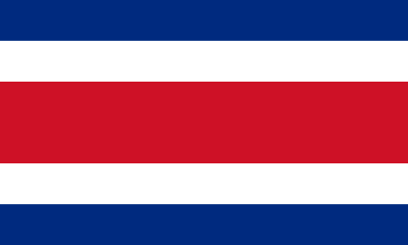
Hire in Costa Rica
Begin your journey into human resources best practices and recruitment in Costa Rica here.

Costa Rican Currency
Costa Rican Colón (CRC)

The Capital of Costa Rica
San José
Time Zone in Costa Rica
GMT-3
Important Facts About the Country of Costa Rica
Introduction to Costa Rica
Costa Rica is commonly acknowledged for possessing the most stable and democratic government in Central America. Functioning as a unitary presidential constitutional republic, the nation boasts a just judicial system and an autonomous electoral body. With a literacy rate reaching approximately 98%, Costa Rica stands among the highest in the Western Hemisphere. The country maintains a robust educational system, spanning from primary grades to university levels, with free and mandatory education for all its citizens.
What to Know about Costa Rica’s Geography
Encompassing 51,000 square kilometers, Costa Rica shares borders with Nicaragua to the north, Panama to the southeast, the Pacific Ocean to the west, and the Caribbean Sea to the east. Its coastline extends for a total of 1,290 kilometers. Renowned for its unwavering dedication to the environment, Costa Rica is committed to safeguarding its numerous national parks.
Climate in Costa Rica
Costa Rica experiences a tropical climate throughout the year, featuring diverse microclimates determined by factors such as elevation, rainfall, and geography. The seasons are characterized by varying levels of precipitation, dividing into two distinct periods: the dry summer season and the rainy winter season.
The Culture of Costa Rica
The course of Costa Rican history and its cultural identity have been significantly influenced by European immigration and customs. In the 19th century, the arrival of German, Italian, and British immigrants left a lasting impact on education, science, and culture in Costa Rica. Additionally, during the 1980s, a wave of immigrants and refugees from neighboring nations sought refuge in the country. Costa Rica has also emerged as a favored destination for retirees from the United States.
Religions Observed in Costa Rica
Around 75% of Costa Ricans adhere to Roman Catholicism, which holds the status of the official religion. Nevertheless, the constitution of 1949 guarantees freedom of religion. Approximately 13% of the population identifies as Protestant, and there are modest communities of Quakers, Jews, and Mennonites.
Languages Spoken in Costa Rica
The predominant language in Costa Rica is Spanish, marked by distinctive local characteristics. Afro-Caribbean immigrants speak an English-based Creole language. Approximately 10.7% of Costa Rica’s adult population is proficient in English, and 0.7% in French. Additionally, around 0.3% of the population speaks Portuguese or German as a second language.
Costa Rican Human Resources at a Glance
Employment Law Protections in Costa Rica
While Costa Rica’s primary employment law is the Labor Code, various other statutes and regulations govern the employment relationship. These encompass the Opportunity Act for Persons with Disabilities, the Equal Opportunity for Women Law, and the Worker Protection Act overseeing employee pensions.
In Costa Rica, the Labor Court typically resolves issues in favor of the employee.
The government of Costa Rica has entered into the Dominican Republic–Central America Free Trade Agreement (CAFTA-DR), employing a three-step approach to enhance working conditions. Notably, Costa Rica’s working conditions align with those in North America and Europe.
The three-step approach involves ensuring effective enforcement of labor laws in Costa Rica, fostering collaboration with the International Labor Organization to enhance existing labor laws, and bolstering local capacity, expertise, and infrastructure to advance employees’ rights. The CAFTA-DR represents a pioneering treaty, incorporating targeted training programs addressing child labor, promoting public awareness of worker rights, and enhancing labor inspection systems.
Employment Contracts in Costa Rica
In Costa Rica, both the employer and the employee are obligated to sign an employment contract, which must encompass the following essential information:
- Employee’s name, nationality, age, sex, and marital status.
- Addresses of both contracting parties.
- Numbers and details of identity cards.
- Specific details in cases where the employee holds temporary residence.
- Duration and nature of the employment contract, including agreed remuneration and payment particulars.
- Agreements on working hours and overtime.
- Workplace location.
- Any additional provisions in the contract, such as termination of services, notice periods, etc.
- Date and place where the contract was signed.
Costa Rica's Contract Terms
Employment contracts in Costa Rica can be either limited or unlimited in duration. Limited time contracts specify a distinct time span, concluding once the designated work is completed.
Additionally, contracts differ based on the type of working day, with two categories in Costa Rica:
- Normal Working Days (Jornadas Ordinarias Normales): This entails daytime working hours ranging from eight to 10 hours per day, with a maximum weekly total of 48 hours. For night hours, Normal Working Days can extend up to six hours per day but not surpass 36 hours per week.
- Special Working Days (Jornadas Especiales o de Excepcion): This applies to individuals working on Saturdays and extends to certain fields of employment where extended working hours are necessary.
Pre-Employment Checks
Upon the employer’s request, the employee is obligated to provide the outcomes of a medical examination indicating the absence of any permanent disability or occupational, contagious, or incurable disease. Justification for medical examinations must be grounded in objective and reasonable reasons, either stemming from the job’s nature or for the protection of the employee’s health. Notably, in Costa Rica, it is strictly prohibited to conduct tests for HIV or pregnancy.
Costa Rica's Guidelines Regarding Probation Period
Employers have the authority to subject new employees to a probationary period, which is capped at three months. Extensions of probationary periods are not permissible.
Regulations and Rules Regarding Working Hours in Costa Rica
In Costa Rica, the standard work schedule for professional employees is eight hours a day, five days a week. For laborers, the usual work schedule consists of eight hours a day from Monday to Friday, with a half-day on Saturday.
Employees are permitted to work up to 10 hours a day, provided the tasks involved are not hazardous. However, the total weekly working hours for an employee must not exceed 48 hours.
Costa Rican Laws Regarding Overtime
Employees are eligible for special rates of overtime compensation for hours worked beyond the standard daily and weekly limits. The overtime pay rate is influenced by factors such as the frequency of employee payments, whether weekly or monthly, and adjustments may be made if the overtime is worked on mandatory holidays.
Overtime is capped at four hours per day, contributing to a maximum of 12 working hours per day, inclusive of the overtime hours. The additional compensation for overtime is set at 50% of the regular salary.
Certain positions, such as managerial roles or work inherently unsuitable for regular hours (e.g., commission-based roles), are exempt from the maximum hourly limitations. However, they are not compelled to work beyond 12 hours a day.
Rules Regarding Bonus and 13th Month Pay in Costa Rica
Each employee is entitled to receive a Christmas bonus, known as “aguinaldo,” equivalent to one month’s salary. This bonus is calculated by summing up the total wages paid to an employee over the past year, including overtime payments, and then dividing the total by 12. The Christmas bonus must be disbursed within the initial 20 days of December.
For employees who have not completed a full year of work, the Christmas bonus is calculated using a similar formula, considering the average monthly salary up to that point.
Failure to provide the Christmas bonus is considered equivalent to terminating the employee without cause. In such cases, the employer is obligated to fulfill statutory compensation and applicable severance payments.
Costa Rica's Requirements Regarding Notice Periods
- If employed for over 3 months but less than 6 months: 1 week notice period.
- If employed for over 6 months but less than 1 year: 2 weeks notice period.
- If employed for 1 year or more: 1 month notice period.
Termination
Costa Rican law permits either the employer or the employee to terminate the employment relationship. In the event of termination, the employer is obligated to provide workers with a certificate or letter confirming the end of the work contract. This requirement applies irrespective of the reason for the termination, whether it be dismissal or resignation.
Employer’s rights to terminate a worker:
Termination may occur under the following circumstances:
- At any point during the probationary period.
- Commission of violent or criminal acts by the employee, or actions that jeopardize workplace security and working conditions.
- Disclosure of confidential company information.
- Unjustified absence from work for two consecutive days or three or more non-consecutive days within the same calendar month.
Employee’s rights to terminate an employment contract:
Grounds for termination include:
- Unsettled salary payments.
- Engagement in immoral acts at the workplace or subjecting the employee to physical and verbal attacks.
- Deliberate damage to the worker’s tools by the employer, their relatives, or dependents.
- Presence of contagious diseases among the employer, relatives, or dependents in the workplace.
- Working conditions that pose hazards to the health or safety of the worker or their family.
Either party involved in the labor contract can terminate it without just cause by providing prior notice (Preaviso) to the other party. After completing three months of employment with the employer, the employee is entitled to receive prior notice if the employment contract is to be terminated.
Similarly, the employee must also give sufficient notice, or a deduction may be applied to the settlement payment.
If the employer opts not to have the employee serve the notice period, they must pay a ‘Preaviso’ compensation equal to one month’s salary. This compensation is prorated for employment periods of less than one year and is calculated based on the average earnings of the employee over the last six months. However, if the employer permits the employee to complete the notice period, ‘Preaviso’ compensation is not required.
Throughout the notice period, the employer must provide the soon-to-be terminated employee with one day off per week to facilitate the search for another job.
Severance Pay in Costa Rica
If an employee is terminated without valid justification or resigns with just cause, the employer is obligated to provide ‘Cesantia’ compensation. The compensation amount escalates based on the duration of the employee’s service.
The severance pay is governed by the following regulations:
- If the employment lasted for more than 3 months but less than 6 months, the compensation is equivalent to 7 days’ wages.
- For employment periods exceeding 6 months but less than 1 year, the compensation amounts to 14 days’ wages.
- If the employment duration is over 1 year, the following schedule is applicable:
| Number of Years Worked | Days of Severance Pay |
| 1 | 19.5 |
| 2 | 20 |
| 3 | 20.5 |
| 4 | 21 |
| 5 | 21.24 |
| 6 | 21.5 |
| 7 | 22 |
In cases of justifiable termination, the employer is required to provide the Christmas Bonus (Aguinaldo) in proportion to the months worked since the beginning of the year. Additionally, the employer must grant vacation benefits and issue an advance notice to the employee before the termination of employment.
The Christmas Bonus remains unaffected by the payment of ‘Cesantia’ or ‘Preaviso’ and must be disbursed if an employee’s services are concluded before December. The payment is calculated based on the average total earnings from the preceding December 1 to the date of termination.
Accrued but unused vacation time is to be compensated as accumulated vacation pay (Vacaciones). As part of the severance package, the employee is entitled to one day of vacation pay for each month worked. For instance, an employee who worked for eight months without taking any vacation days upon termination is entitled to eight days’ wages as vacation severance.
Fixed Term Contacts for Costa Rican Employees
Fixed-term contracts in Costa Rica have certain restrictions. The duration of such contracts cannot exceed one year and is strictly reserved for temporary work. Nevertheless, in cases where special technical skills are essential, the fixed-term contract may be extended for up to five years.
If employees continue working beyond the stipulated duration of a fixed-term contract or surpass one year, they are considered to be employed for an indefinite period.
Restrictive Covenants
In Costa Rica, non-compete provisions are permissible as long as they are reasonable and the employee receives compensation during the restricted period. The specifics, including terms, geographical constraints, payment details, and restricted activities, need to be evaluated individually. In cases where the payment amount is not explicitly agreed upon, it will be assumed that the compensation is equivalent to 50% of the employee’s salary for the non-compete duration.
Additionally, non-solicitation provisions are also allowed in Costa Rica.
Tax and Social Security Information for Employers in Costa Rica
Personal Income Tax in Costa Rica
In compliance with Costa Rican legislation, employees are obligated to pay taxes on the income they generate within the country. The income tax structure is progressive, meaning individuals with higher earnings are subject to higher tax rates.
Employers serve as the withholding agents for their employees. The withholding rate varies from 0% to 15% of gross wages. Tax deductions are remitted to the tax authorities, specifically the Ministry of Finance Unified Tax Registry, on a monthly basis.
The fiscal tax year concludes on October 31, with tax filings required to be submitted in Costa Rica by December 15.
| Monthly Taxable Income (Colón) | Tax Rate % |
|---|---|
| 0 – 929,000 | 0 |
| 929,000 – 1,363,000 | 10 |
| 1,363,000 – 2,392,000 | 15 |
| 2,392,000 – 4,783,000 | 20 |
| >4,783,000 | 25 |
Social Security in Costa Rica
Costa Rica’s social security system ensures comprehensive coverage for the healthcare and old-age requirements of residents. Mandatory contributions from all employees sustain the system, which also extends support to those who may be unable to contribute. The overarching goal is to offer a reliable income and financial assistance to employees, ensuring ongoing support even during their retirement.
The pertinent legislative bodies overseeing social security in Costa Rica include:
- The social security system in Costa Rica is managed by the Costa Rican Social Security Fund, also known as Caja Costarricense del Seguro Social or CCSS.
- The National Insurance Institute in Costa Rica is referred to as Instituto Nacional de Seguros.
- The Ministry of Finance in Costa Rica is known as Ministerio de Hacienda.
Social security eligibility in Costa Rica is not contingent on a person’s country of origin. Every citizen, resident, and temporary permit holder is mandated to contribute. Employers must register each of their employees with the CCSS, which, in collaboration with the Ministry of Health, manages the country’s health system.
Contributions to social security must be made between the 26th of the current month and the 6th of the following month.
- Both the employer and the employee share the responsibility for social security contributions.
- Employers contribute 26.67%, while employees contribute 10.67%.
- These percentages are calculated based on the employee’s gross salary.
Approximately 3% of the deduction is directed to the employee’s pension fund. The Costa Rican health system provides coverage for medical treatment, including illness and maternity, as well as mandatory pension support for disability, old age, and death. Additionally, individuals have the option to acquire private insurance or health plans.
According to the Workers Protection Law, every worker is required to maintain an individual retirement account and an individual capitalization account with a public or private pension plan operator. Both employers and employees contribute to these accounts. The funds accumulated in the pension account can be withdrawn in the event of retirement, disability, or death.
The capitalization account is accessible in the case of unemployment. If an employee experiences termination of their labor contract without cause, the employer is obliged to continue severance payments.
*The rates provided above serve as a general reference. The actual charges levied by GoGlobal may vary.
Deduction From Pay (If Applicable)
The following comprise taxes associated with employment:
- Income tax on the worker’s salary
- The employer’s contribution to CCSS
- The employee’s contribution to CCSS
Important Information for Costa Rican Employees
Salary Payment
Compensation can be established on an hourly, daily, biweekly, or monthly basis, as mutually agreed upon by employers and employees. The duration between payments must not exceed one month.
Payslip
Costa Rican employers have the option to furnish employees with digital payslips. Nevertheless, employees are required to respond via email to acknowledge the receipt of the payment.
Timesheets & Record Keeping
Records of payroll reports must be maintained for a period of five years.
Annual Leave
- An employee is eligible for two weeks of vacation, totaling twelve days, along with a minimum of two rest days for every fifty consecutive weeks of service with the same employer. This entitlement remains consistent regardless of the weekly working hours, be it eight hours, six hours, half-time, one hour, one day, or several days a week.
- In the event of termination before completing a year’s work, an employee is entitled to either one day’s wages or earned leave, which will be compensated.
- The Labor Code prohibits the carryover of vacation time and discourages the division of vacation periods. Only under specific circumstances does the law permit the splitting of vacation time into a maximum of two periods.
Public Holidays
- There are a total of 12 public holidays in Costa Rica.
- For employees required to work on Sundays or statutory holidays, compensation must be provided at a rate twice the normal wages.
Sick Leave
- In Costa Rica, an employer must cover a minimum of 50% of the salary for the initial three days of an employee’s sick leave, while the Social Security Administration (Caja Costarricense de Seguro Social or CCSS) is responsible for the remaining 50%.
- Starting from the fourth day of sick leave, the CCSS covers 60% of the salary, and the employer is not obliged to provide salary for the subsequent sick leave duration. However, the employee is required to present a medical certificate obtained from an accredited CCSS doctor.
Maternity, Paternity, Parental Leave
- The employer is required to grant maternity leave, commencing one month prior to the childbirth and extending for three months following the birth of the child. Throughout the four months of leave, the employer must cover 50% of the salary, while the remaining 50% is covered by the CCSS.
- In the event of an employer terminating the services of a pregnant woman, regular wages must be paid from the date of dismissal through the eighth month of pregnancy.
- Male employees are eligible for eight days of paternity leave, distributed as two days per week over the four weeks following the birth of the child. During this paternity leave, 50% of the salary is paid by the employer, and the other 50% is covered by the CCSS.
Nursing Care Leave
Breastfeeding License
Mothers have the right to a nursing license with compensation, allowing them to take one paid hour off work each day. This license remains valid as long as the mother continues nursing the child, and the employee must furnish her employer with a medical certification.
Compassionate / Bereavement Leave
In the unfortunate event of the death of an immediate family member, an employee is granted three days of paid bereavement leave.
Benefits to the Employee in Costa Rica
Costa Rican Statutory Benefits
Unemployment Insurance (Seguro de Desempleo): This coverage offers temporary income determined by the average salary received in the preceding three months. It’s important to note that not all causes of unemployment are covered.
Adolescent Work Insurance (Seguro de Riesgos para Adolescentes): This insurance extends coverage to self-employed individuals aged 15 to 18, specifically for accidents and illnesses resulting from work-related activities.
Income Insurance (Protección Crediticia): INS provides two distinct credit insurance options.
- The Credit Card Protection Policy (Protección Crediticia Tarjeta de Crédito) assumes responsibility for credit card payments during a 12-month period for individuals facing unemployment. This policy is applicable to legal residents of Costa Rica who are at least 18 years old and not yet of retirement age. To qualify, the individual must have been employed continuously for six months before becoming unemployed.
- The Unemployment Protection Policy (Protección Crediticia por Desempleo) operates similarly to the Credit Card Protection Policy but specifically addresses mortgage payments.
Worker’s Compensation Insurance (Riesgos del Trabajo)
This insurance system safeguards workers against accidents that occur during their working hours. Administered by the National Institute of Insurance (Instituto Nacional de Seguros), it is mandatory for every employer to furnish each employee with a Worker’s Compensation Insurance Policy as per legal obligations.
Rules Regarding Visas and Foreign Workers in Costa Rica
General Information
Costa Rica currently imposes no restrictions on the quantity or proportion of foreigners permitted to work within the country. The Constitution explicitly prohibits discrimination in terms of wages, benefits, or working conditions between Costa Rican citizens and foreigners. Nonetheless, employers are obligated to prioritize Costa Rican workers for job opportunities. Work permits are exclusively granted when employers can demonstrate the necessity for the foreign employee’s skills, not readily available in the local workforce.
A Costa Rica work permit falls under the “Special Category” of immigration permits, alongside a student permit. This classification permits the holder to both work and reside in the country, subject to the conditions stipulated by the Ministry of Labor and Social Security. Securing a work visa necessitates having an employer willing to hire the foreigner, and the processing time for a Costa Rica work permit typically ranges from three to eight months. All documents must undergo translation into Spanish and be notarized.
Permanent residence or citizenship are the only two immigration statuses without restrictions. Other residence options, such as ‘rentista’ or ‘pensionado,’ are considered temporary, and these permits do not automatically grant the holder the right to work. To qualify for permanent residence, an individual must have held temporary residence for a minimum of three years before submitting an application.
Individuals who can work in Costa Rica without holding citizenship or permanent residence include:
-
Individuals engaged in home-based businesses that operate over the internet, such as freelance writers, graphic designers, or traders, provided they can substantiate that their income is derived from outside of Costa Rica.
-
Business owners, granted they possess temporary residence, are allowed to supervise business operations as shareholders. However, they are not permitted to undertake daily job functions as employees.
The Youth Mobility program offers an additional avenue for living and working in Costa Rica. This opportunity, albeit limited, is exclusively available to Canadian citizens aged 18-35, with the permit being valid for up to one year.
Public Holidays Recognized by Costa Rica in 2024
| Occasion | Date | |
|---|---|---|
| 1 | New Year’s Day | January 1 |
| 2 | Maundy Thursday | March 28 |
| 3 | Good Friday | March 29 |
| 4 | Juan Santamaria Day | April 1 |
| 5 | Labour Day | May 1 |
| 6 | Annexation of Nicoya Party | July 25 |
| 7 | Day of the Virgin of the Angels | August 2 |
| 8 | Mother’s Day | August 15 |
| 9 | Afro-Costa Rican Culture Day | August 31 |
| 10 | Independence Day | September 15 |
| 11 | Abolition of the Army | December 1 |
| 12 | Christmas Day | December 25 |
Hire New Talent in Costa Rica
Our global hiring solutions enable you to onboard individuals in any country without the investment required to establish a local entity.