

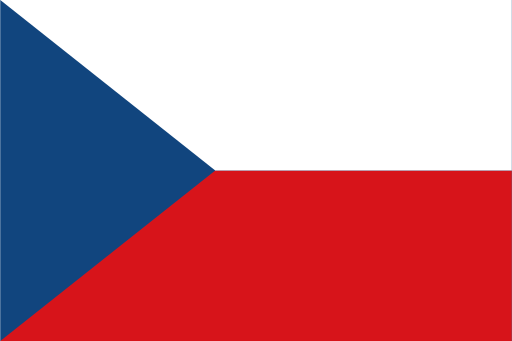
Hire in Czech Republic
Here’s your starting point for implementing human resources best practices and managing recruitment processes in the Czech Republic.

Czech Currency
Czech Koruna (CZK)

The Capital of Czech Republic
Prague
Time Zone in Czech Republic
GMT+1
Important Facts About the Country of Czech Republic
Introduction to Czech Republic
Czechia, officially known as the Czech Republic, is a parliamentary republic that emerged on January 1st, 1993, following the dissolution of Czechoslovakia into two separate nations: the Czech Republic and Slovakia. With a population of 10.7 million people, Prague serves as both the capital and largest city.
What to Know about Czech Republic’s Geography
Situated in Central Europe, the Czech Republic is a landlocked country bordered by Poland to the north, Germany to the west, Austria to the south, and Slovakia to the east. Encompassing an area of 78,886 square kilometers, approximately 95% of its terrain is characterized by hills and mountains.
Climate in Czech Republic
The Czech Republic falls within a temperate climate zone, marked by mild, humid summers featuring sporadic hot periods, and cold, overcast, and humid winters. Occasional Arctic spells may also occur.
The Culture of Czech Republic
Historically situated between German and Slavic territories, the Czech Republic’s cultural traditions reflect a blend of both influences. The Czech people exhibit a distinct cultural identity, shaped by their country’s central location in Europe. Although they speak a Slavic language, Czechs have been significantly influenced by western European political, economic, and social developments.
Religions Observed in Czech Republic
In the Czech Republic, around 80% of individuals do not officially affiliate with any religion or faith. The estimated atheist population in the area stands at approximately 30%. Approximately 10% of the population identifies as Catholic.
Languages Spoken in Czech Republic
The official language spoken in the Czech Republic is Czech.
Czech Republic Human Resources at a Glance
Employment Law Protections in Czech Republic
The primary sources of employment law in the Czech Republic include the Labor Code and the Employment Act. The Labor Code governs various aspects of employment, including working hours, holidays, wages, overtime, occupational health, safety, and termination procedures. Additionally, employment relationships are regulated by the Civil Code, the Collective Bargaining Act, and various other legal regulations.
Unlike some countries, the Czech Republic does not have specialized labor courts. Instead, labor law matters are handled by regular civil courts.
Employment Contracts in Czech Republic
The employment relationship between an employer and employee is established through the execution of an employment contract. An employment contract must always be concluded in writing. The employee must receive a copy while the employer retains a second copy.
Traditional employment contracts must essentially include the following:
- Type of work (function, duties)
- Place of performance of work
- Date of commencement of work
If the contract does not specify the employee’s rights and obligations, the employee must be notified about them in writing within one month of commencing employment. The rights and obligations document should specify:
- the employee’s name and surname
- the name and registered office of the employer
- a detailed specification of the type of work and the workplace
- the amount of leave: by law, no less than four weeks
- the period of notice: the required notice is at least two months, unless agreed otherwise
- the weekly working time and work schedule: the basic working time is 40 hours per week
- details on pay and the arrangements for compensation (including frequency, date, place and method of payment)
- information on collective bargaining agreements (CBAs) governing working conditions
- information on the conditions of employment and internal rules on health and safety at work
- information on the CBA and internal rules
The employment relationship commences on the specified start date as outlined in the employment contract. Should the employee fail to report for duty on the agreed-upon date and neglect to notify the employer of the reason within one week, the employer reserves the right to terminate the employment contract.
Any modifications to the agreed terms of the employment contract require mutual consent between the employer and the employee. Such alterations must always be formalized in writing.
Managing directors are prohibited from entering into standard employment contracts with companies, except in cases where the nature of the work under the employment contract substantially differs from the responsibilities of a managing director. Instead, they are required to enter into an agreement pertaining to the execution of their duties as managing directors. Such agreements are considered commercial in nature and thus fall outside the scope of the Czech Labor Code.
Czech Republic's Contract Terms
In the Czech Republic, there are two main types of employment contracts:
1. Fixed-term Employment Contract
2. Permanent Employment Contract
Additionally, employees may engage in work under other types of agreements:
- – Job Completion Agreement: Work scope limited to 300 hours per year
- – Work Performance Agreement: Work scope restricted to a maximum of half the determined weekly working hours (20 hours)
Czech Republic's Guidelines Regarding Probation Period/Trial Period
Employees and employers can mutually agree to a probationary period lasting up to three months, during which no statutory notice period is required. However, for managerial employees, the maximum probationary period extends to six months.
For fixed-term contracts, the probationary period cannot exceed half the total duration of the contract.
Regulations and Rules Regarding Working Hours in Czech Republic
The typical standard working week consists of 40 hours, with certain statutory exceptions applying.
Czech Laws Regarding Overtime
There are limitations on the amount of overtime that employees can undertake. Employers can request overtime up to a maximum of 150 hours per calendar year. However, parties may agree to extend this to 416 hours per calendar year, provided that the average overtime over a period of 26 consecutive weeks (or 52 weeks if specified in a Collective Bargaining Agreement) does not exceed eight hours per week.
Employers are required to provide additional compensation, such as a premium or time-off, for overtime worked. Alternatively, they may choose to incorporate future overtime into the employee’s salary. This option is available for up to 150 hours per calendar year for regular employees and up to 416 hours per calendar year for managerial employees.
For work performed on rest days, such as Saturdays or Sundays, employees are entitled to their regular salary along with a premium of at least 10% of their average earnings for the hours worked.
Health and Safety in the Workplace
Occupational health and safety in the Czech Republic are governed by a comprehensive legal framework. The Public Health Protection Act empowers the Regional Public Health Authorities to monitor compliance with prohibitions and other obligations outlined in the Act. Additionally, it mandates adherence to directly applicable regulations of the European Union to safeguard public health, encompassing manufacturing practices and occupational health considerations, including physical and mental well-being. These legal provisions also extend to other relevant working conditions, such as workplace equipment, and public health directives.
Prior to commencing employment, all employees are required to undergo an initial medical examination.
Rules Regarding Bonus and 13th Month Pay in Czech Republic
In the Czech Republic, bonuses are not mandatory, but numerous companies opt to adjust salaries to include bonuses biannually.
Termination
An employment relationship can be terminated effectively through agreement, notice, immediate termination, or termination within the probationary period. However, all termination methods must adhere to statutory provisions.
Employers are only authorized to give notice of termination for reasons explicitly stipulated in the Labor Code:
1. Organizational reasons: This includes scenarios where the employer’s enterprise ceases operations, undergoes liquidation, relocation, or the employee faces redundancy.
2. Health reasons: An employee may be terminated based on a medical report issued by an occupational health service provider or a decision of the competent administrative authority, provided specific health conditions are met.
- The employee may cease work due to reasons such as occupational injury, occupational disease, the risk of occupational disease, or having reached the maximum permissible level of harmful exposure.
- Alternatively, if the employee’s long-term health condition renders them unable to carry out their current duties, they may also discontinue work.
An employee fails to fulfill the job requirements through no fault of the employer.
Immediate termination of the employment relationship may occur under the following circumstances:
- – The employee commits a severe breach of duty or is lawfully sentenced to prison for a crime.
- – The employee significantly, or repeatedly but less severely, violates a statutory obligation related to their job performance.
- – The employee seriously violates their duty to adhere to the prescribed regimen of an insured person during the initial 14 calendar days of temporary incapacity for work due to sickness.
The employer has the authority to terminate the employment immediately upon learning of the grounds for immediate termination, with the termination taking effect upon delivery to the employee. However, this termination must occur within a period of two months from the date of learning about the reason for immediate termination, but no later than one year from the date of the incident leading to termination.
Unfair Dismissal:
If an employee is dismissed, they have the right to challenge the validity of the dismissal by submitting a claim to the court within two months from the purported termination date. Should the court uphold the claim, the employment relationship is reinstated, and the employee is entitled to salary compensation for a specific period, potentially capped at six times the average monthly wage by the court, depending on the circumstances.
Notice of Termination:
Either the employer or employee may terminate the employment relationship by providing written notice, without stating the cause. The termination notice must be delivered to the other party. Under specific and stringent conditions, termination documents may be delivered electronically.
Involvement of Trade Union, Works Council, or Labor Office:
The involvement of works councils is typically unnecessary in the termination process, except for collective redundancies. However, the employer must discuss any notices of termination in advance. Immediate termination of employment must be discussed with the trade union. Trade union approval is mandatory only if the employee is a trade union officer, but a court decision may substitute this approval if withheld unjustifiably. The labor office must be notified only in cases of collective redundancy or the dismissal of a disabled person or non-Czech citizen.
Collective Redundancies/Mass Layoff Rules:
Collective redundancies, defined as dismissals for organizational reasons within a 30-day period, trigger specific thresholds based on the employer’s size. The employer must inform the works council and trade union (or directly affected employees) at least 30 days before issuing termination notices. Negotiations must be conducted to reach a compromise or reduce the number of affected employees.
Protected Groups of Employees:
Termination notices are prohibited during designated “protection periods,” including when an employee is temporarily unfit for work, conscripted, on pregnancy, maternity, paternity, or parental leave. Exceptions apply if the termination is due to organizational reasons, such as enterprise closure or relocation.
Managing Directors:
Managing directors are not considered employees in the Czech Republic, and labor law protections do not apply to them. Their relationship with the company is commercial rather than employment-based, allowing for revocation of their appointment without stating a reason.
Statutory Right to Pay in Lieu of Notice or Garden Leave:
There is no unilateral right to pay in lieu of notice, but it can be agreed upon in a termination agreement. Although not expressly regulated, garden leave is increasingly practiced, requiring the employer to pay the employee a compensatory salary throughout the period.
Czech Republic's Requirements Regarding Notice Periods
- The notice period must be uniform for both the employer and the employee, with a minimum duration of two months.
- Any extension of the notice period requires a written agreement between the employer and the employee.
- Commencing on the first day of the calendar month following the delivery of the notice, the notice period concludes on the last day of the subsequent calendar month.
- Immediate termination of the employment relationship, such as in cases of gross breach of duty or lawful sentencing to prison for a crime, does not necessitate a notice period.
Post-Termination Restraints/ Restrictive Covenants
Employment contracts may include non-competition clauses, which are governed by Sections 310/311 of the Labor Code.
According to the Labor Code, a non-competition clause must be documented in writing as part of the employment agreement or as a separate contract. Typically, this clause obliges the employee to refrain from:
1. Engaging in activities identical to the employer’s business.
2. Participating in competitive endeavors that could undermine the employer’s interests.
Such restrictions can remain in force for a specified period after employment termination, with a maximum duration of one year.
The agreement for a non-compete clause should be reasonable for the employee, considering the knowledge, skills, and proprietary information acquired during employment. Additionally, it should assess whether the employee’s engagement in competitive activities could significantly harm the employer’s business.
The employer is obligated to provide monetary compensation, amounting to at least half the average monthly salary for each month during which the employee abides by the non-compete obligation. This compensation must be clearly outlined in the clause and based on the employee’s pre-termination salary.
In practice, non-compete clauses often include provisions for contractual penalties in case of breach. Without such penalties, enforcing the non-compete clause becomes challenging.
Non-competition agreements for managing directors may be arranged through a performance agreement, typically concluded with a member of the statutory body. The regulatory requirements outlined in the Labor Code do not automatically apply to managing directors unless explicitly agreed upon.
Redundancy/Severance Pay in Czech Republic
As per the Labor Code in the Czech Republic, an employee who undergoes termination by notice is eligible for severance pay, the amount of which hinges on their length of employment and the rationale for dismissal. These severance payments are outlined as follows:
- – For employment lasting less than one year: The employee receives a one-time payment equivalent to the average monthly earnings in cases of organizational dismissals, including collective redundancies.
- – If the employee has served with the employer for at least one year but less than two: The severance pay amounts to two months’ worth of average earnings.
- – If the employee has served with the employer for at least two years: The severance pay amounts to three months’ worth of average earnings.
In instances of dismissal due to health reasons, the employee is entitled to severance pay up to 12 times their average monthly salary. For dismissals based on other grounds, the parties have the option to negotiate a higher severance payment.
Czech Timesheets
In 2019, the European Court of Justice mandated that companies establish a system to record employees’ working hours. Consequently, employers must maintain an objective, reliable, and accessible system to accurately track employees’ work hours.
Trade Unions/ Collective Agreements in Czech Republic
Trade Unions:
The primary union confederation in the Czech Republic is ČMKOS, although other unions also operate within the country. Approximately 15% of employees in the Czech Republic are affiliated with trade unions.
Collective Bargaining:
Around 45% of employees in the Czech Republic are covered by Collective Bargaining Agreements (CBAs). According to Czech law, collective bargaining can occur at both the company and industry levels. Typically, collective bargaining occurs more frequently at the company level, although it also takes place within specific industries such as heavy industry, engineering, retail, education, or healthcare. The primary objective of collective bargaining is to negotiate the terms of CBAs.
Work Councils:
Work councils are relatively rare in the Czech Republic compared to trade unions. This is largely due to the fact that, under Czech law, work councils have fewer rights than trade unions. Work councils have limited rights in terms of being informed or consulted on specific issues only.
Fixed Term Contacts for Czech Employees
In the Czech Republic, there are no legal stipulations regarding the minimum duration for which a fixed-term employment contract can be established. However, the maximum duration permitted is three years, and only three consecutive fixed-term employment contracts are permissible.
Tax and Social Security Information for Employers in Czech Republic
Personal Income Tax in Czech Republic
Income tax in the Czech Republic is determined based on the super-gross salary, which comprises the gross salary of the employee plus the social and health insurance contributions paid by the employer. For the year 2024, there is a unified tax rate of 15% applicable to all natural persons for annual income up to CZK 1,582,812. Any income exceeding this threshold is subject to a tax rate of 23%.
Social Security in Czech Republic
Social security taxes are compulsory for individuals employed by a Czech company, with mandatory contributions calculated based on the individual’s gross remuneration, which encompasses most employee benefits and allowances. Generally, income subject to income tax is also subject to contributions to the social security and health insurance system.
Employer contribution rates are set at 24.8% for social security and 9% for health insurance, while employee contribution rates stand at 7.1% for social security and 4.5% for health insurance.
There is a maximum annual cap for the assessment base used in calculating contributions to the social security system, which is 48 times the average monthly wage per year (e.g., CZK 2,110,416 for 2024). Both employees and entrepreneurs are subject to this cap.
*Please note that the provided rates serve as general guidance, and the actual rates applied by GoGlobal may vary.
Important Information for Czech Employees
Salary Payment
Salaries are typically disbursed on a predetermined pay date via bank transfer to an employee’s account. Alternatively, employees may opt to receive their salary directly in cash. Payment is made for work completed and is to be received no later than the subsequent month. Additionally, advance payments may be arranged, which can be issued to employees prior to the scheduled pay date. It’s also possible for wages to be paid in a foreign currency provided there is an established exchange rate set by the Czech National Bank.
Payslip
On the designated monthly salary payment date, the employer must furnish the employee with a written document detailing individual salary components and deductions. Upon request from the employee, all documents utilized in calculating the wage must be provided.
Annual Leave
The statutory minimum for annual leave is four weeks (20 working days) per calendar year, excluding public holidays.
In some cases, longer holiday entitlements may be negotiated in Collective Bargaining Agreements (CBAs). Certain groups of employees, such as those in public administration, autonomous public bodies, and contributory organizations, are entitled to five weeks, while others, such as teachers and academic staff, may receive eight weeks.
Employees are entitled to a proportional part of annual leave for each month of employment with the same employer, amounting to one-twelfth of the annual leave for every calendar month worked.
Employees become eligible to take holidays after working for 60 days. If an employee works for a shorter period, they can take one-twelfth of the total annual leave entitlement for every 21 days worked in the applicable calendar year.
The timing of holiday entitlements is determined by the employer in agreement with the trade union or the employee. Every employee is entitled to take at least two consecutive weeks of holiday. Additionally, an extra week of leave is provided for specific groups of employees engaged in particularly strenuous work throughout the calendar year.
Unused leave may be carried over to the following year upon written request from the employee.
Sick Leave
In cases of temporary incapacity among employees due to illness, injury, quarantine, and other circumstances outlined in sickness insurance regulations:
The employer is obligated to provide sickness benefits for the initial 14 working days of incapacity. These benefits amount to 60% of the employee’s average salary, subject to a maximum limit. Higher-paid employees receive a reduced percentage of their average salary.
Starting from the 15th calendar day of incapacity due to sickness, employees are entitled to sickness benefits administered by the Czech Social Security Administration (CSSZ). These benefits, set at 60% of the employee’s average salary, are payable for a maximum of 380 days from the onset of sickness.
To access sick pay, employees must present a medical certificate as proof of their illness. Medical practitioners are required to submit these certificates electronically to the CSSZ. While it’s the responsibility of employees to inform their employers of their incapacity for work, employers should verify the medical certificates online, as employees are not obliged to provide physical copies to their employers.
Compassionate and Bereavement Leave
Governmental Decree No. 590/2006 Coll. outlines a range of circumstances necessitating paid time off for employees, referred to as personal leave. This encompasses various events such as medical examinations, weddings, and the arrival of a newborn child. Additionally, personal leave extends to instances of bereavement and funerals involving members of the employee’s immediate family.
Other Rights for Leave of Absence
Military Leave
Employees have the right to take leave for military training, which is compensated by the military. However, as military service is voluntary in the Czech Republic, this entitlement primarily affects individuals who volunteer for such training, resulting in limited practical significance.
Leave for Public Office
In the event of an employee being elected to a public office, the employer is obligated to allow them to assume their duties and provide unpaid leave of up to 20 days per year.
Maternity and Parental Leave
Maternity Leave
- Female employees are entitled to maternity leave for a duration of 28 weeks to facilitate childbirth and care for their newborn. In the case of multiple births, this entitlement extends to 37 weeks.
- Maternity leave can commence six weeks prior to the expected childbirth, known as confinement, but not earlier than eight weeks before. In the unfortunate event of a stillborn child, the maternity leave entitlement is 14 weeks.
- If the mother has been employed for at least 270 days in the two years preceding the birth, she qualifies for maternity benefits under sickness insurance. These benefits, equivalent to approximately 70% of daily salary, are payable throughout the maternity leave period, beginning no later than six weeks before childbirth and continuing for up to six months afterward.
- Notification to the employer suffices for initiating maternity leave, using a prescribed form endorsed by the attending physician.
- During maternity leave, the employee’s absence is excused, although she is not entitled to salary compensation but rather to sickness insurance benefits.
- For the purposes of annual leave accrual, maternity leave is considered time worked.
- Upon the conclusion of maternity leave, the employer must reinstate the employee to her original role and workplace. If this is not feasible due to closure of the job or workplace, the employer must offer an alternative position commensurate with the employment contract.
- An employer can only terminate an employee on maternity leave if the employer or its division is being dissolved.
Parental Leave
Upon request, parental leave may be granted to a mother after the conclusion of maternity leave or to a father following childbirth. Additionally, employees can request parental leave upon taking a child into their care. This leave can be utilized until the child reaches the age of four. The employer is mandated to provide parental leave under the Labor Code, though it’s not obligatory after the child turns three. Parental pay is available until the child reaches four years of age or until a total of CZK 300,000 is utilized.
Paternity Leave
Fathers are entitled to paternity leave for postnatal care if their name is listed on the birth certificate. This leave lasts for 14 days and can be taken within six weeks of the child’s birth or from the date of assuming care for the child. The commencement date of paternity leave is flexible for each father. Sickness insurance covers the entirety of paternity leave at approximately 70% of daily salary.
Employees on maternity, paternity, or parental leave are protected against termination.
Adoption Leave
The rights to maternity or parental leave and associated payments extend to both female and male employees who assume care for a child, including situations of adoption, child custody, and guardianship. A female employee is entitled to 22 weeks of maternity leave from the day she assumes care of a child, extending to 31 weeks for multiple children. This leave period cannot surpass the child’s first birthday. Parental leave for adoptive parents follows the same guidelines as for birth parents.
Childcare Leave
- Under the Labor Code, employees can take time off work to care for a child under 10 years of age or to attend to a sick family member.
- If an employee caring for a child under 15 or another dependent requests modified working hours or other reasonable adjustments to their schedule, the employer must accommodate this request unless serious operational reasons prevent it.
Public Holidays
In the Czech Republic, there are 13 fixed bank holidays celebrated annually. Good Friday and Easter Monday are exceptions, as their dates vary. Unlike the “sliding holiday” concept, holidays do not shift to weekdays if they fall on weekends. For instance, if a holiday lands on a Saturday or Sunday, the following Monday remains a regular business day.
Working on a national holiday is typically reserved for ensuring the uninterrupted operations of specific organizations and companies. Employees who work during a national holiday are entitled to additional compensation as mandated by law.
Benefits to the Employee in Czech Republic
Czech Statutory Benefits
In the Czech Republic, social security contributions serve to finance three distinct funds, namely pensions, unemployment benefits, and sickness allowances along with other related benefits.
Other Benefits
Common supplementary benefits for employees in the Czech Republic encompass a range of offerings such as:
- – Meal vouchers
- – Financial bonuses
- – Professional training opportunities
- – Language courses and personal development programs
- – Remote work options
- – Additional days off including holidays, study leave, and sick days
- – Discounts on company products
- – Flexible working hours
- – Company-provided phone
- – Company car or transport allowance
- – Contributions to insurance
- – Refreshments and beverages at the workplace
Meal vouchers, a compulsory benefit in the Czech Republic, are issued based on the employee’s presence at work, with the allowance calculated for days worked. This benefit is exempt from taxation and social and health contributions for both the employer and employee.
Rules Regarding Visas and Foreign Workers in Czech Republic
General Information
Citizens from EU, Switzerland, and EEA countries, as well as their family members, are not required to obtain an Employment permit or Residence permit to work in the Czech Republic.
However, for foreigners from third countries (with some exceptions for specific categories of employees), the following permits are required:
1. Work Permit: This is necessary for seasonal work, individuals holding a long-term residency permit for business purposes, applicants for international protection, etc.
2. Employee Card: Designed for foreign nationals intending to reside in the Czech Republic for longer than three months for employment purposes. This card acts as both a residence and work permit.
3. EU Blue Card: Intended for long-term stays for highly skilled employment. The EU Blue Card serves as both the residence and work permit for eligible individuals.
Short-Term Visa (up to 90 days) – Schengen Visa for Business Purposes
A Business Schengen Visa allows a stay in the Schengen Territory for a maximum of 90 days within any 180-day period. This visa, often termed as a short-stay visa, typically requires the following documents for application:
1. Completed and signed visa application form
2. Two recent passport-sized photos meeting Schengen visa photo requirements
3. Valid passport (with at least three months validity prior to departure)
4. Round trip reservation or itinerary with specified entry and exit dates and flight numbers for the Schengen area
5. Travel insurance policy covering health emergencies (minimum coverage of 30,000 euros)
6. Proof of accommodation for the entire duration of stay in the Schengen area (e.g., hotel booking, rental agreement, or host’s invitation letter)
7. Evidence of financial self-sufficiency during the stay (e.g., bank account statement or sponsorship letter)
8. Payment receipt for visa fee
9. Cover letter detailing the purpose of the visit to the Schengen country
10. Brief profile of the applicant’s workplace
11. Letter from the employer explaining the travel purpose and itinerary within the Schengen zone
The application for an Employee Card must be submitted in person at the appropriate embassy/consulate or its representative in the foreign national’s home country.
Employee Card
An Employee Card is a permit for long-term residence (over 3 months) in the Czech Republic (CR) for employment purposes. Non-European nationals can apply for an Employee Card if they possess skills and qualifications needed by the country.
Holders of an Employee Card are entitled to:
– Reside in the Czech Republic
– Work in the job specified on the card
The Employee Card serves both as a residence permit and a work permit, replacing the need for a visa for stays over 90 days for employment purposes. Long-term residence permits or Green Cards are not issued alongside it.
An Employee Card is typically issued for the duration of the employment relationship, with validity not exceeding two years, and can be repeatedly extended.
The application for an Employee Card at the Embassy incurs an administrative fee of CZK 5,000.
The following documents must be included in the application for an Employee Card. Original documents or officially authenticated copies are required. Any documents not in Czech must be accompanied by an officially certified translation. All submitted documents, except for the travel document and the foreign national’s photograph, must be less than 180 days old:
[Include the list of required documents here.]
A valid travel document
A document confirming accommodation availability
One recent photograph reflecting the foreign national’s current appearance
A contract of employment, ensuring a monthly salary not lower than the basic monthly minimum wage, with a minimum work schedule of 15 hours per week, regardless of the scope of work
Documents evidencing professional qualifications and required education for the desired job
A medical report meeting the Ministry of Health’s conditions on preventing infectious illnesses
A document akin to an extract from the Penal Register record (if requested)
Regarding professional qualifications, an Employee Card covers all employment types regardless of the required professional qualifications. However, it is job-specific and may encompass multiple positions or, if approved by the Ministry of the Interior under previous legislation, a different job. It may also pertain to a new position when changing employers or jobs.
An Employee Card’s validity can be repeatedly extended, subject to meeting the original issuance conditions, up to two years at a time.
Applications for extension must be submitted to the Ministry of the Interior office, no earlier than 120 days before the current card’s expiration and no later than its last valid day.
After approval at a Czech embassy, the foreign national requires a visa for stays exceeding 90 days to collect the Employee Card (D/VR) upon entry into the Czech Republic.
The foreign national must obtain travel medical insurance covering the period from entry until they are covered by public health insurance in the Czech Republic. This visa, typically issued for six months with a maximum 60-day stay, must be reported to a Ministry of Interior office within 90 days of arrival.
EU Blue Card
Foreign nationals intending to stay in the Czech Republic for over three months for a high-skilled job can apply for an EU Blue Card.
Applications must be filed personally at a Czech embassy or in select cases, at a Ministry of Interior office in the Czech Republic.
Requirements include:
- – Travel document
- – Document proving accommodation
– Photographs - – Employment contract for a high-skilled job for at least one year, with a salary at least 1.5 times the average gross annual salary
- – Documents proving high-level skills (education documents)
- – Travel medical insurance until covered by public health insurance
Upon request: - – Extract from the Penal Register record
- – Medical report meeting Ministry of Health requirements
All documents must be originals or notarized copies, in Czech or officially translated. Foreign public documents need an Apostille or super legalization.
During the first two years, changes in employment require Ministry of Interior consent.
Applications for extension must be submitted no earlier than 120 days before the permit expires, or on its last valid day.
The Ministry of Interior decides on EU Blue Card applications within 90 days.
Tax Number Allocation
Upon residence permit approval, the Ministry of Interior allocates a foreign national an identity number, usually entered in the permit card.
If not available during issuance, it’s added later or provided separately.
Lost identity number documents can be verified for CZK 100 administrative fee, purchasable as a stamp from any post office.
Public Holidays Recognized by Czech Republic in 2024
| Occasion | Date | |
|---|---|---|
| 1 | New Year’s Day | January 1 |
| 2 | Good Friday | March 29 |
| 3 | Easter Monday | April 1 |
| 4 | Labour Day | May 1 |
| 5 | Liberation Day | May 8 |
| 6 | Saints Cyril and Methodius’ Day | July 5 |
| 7 | Jan Hus Day | July 6 |
| 8 | Czech Statehood Day | September 28 |
| 9 | Independence Day | October 28 |
| 10 | Freedom and Democracy Day | November 17 |
| 11 | Christmas Eve | December 24 |
| 12 | Christmas Day | December 25 |
| 13 | Second Day of Christmas | December 26 |
Hire New Talent in Czech Republic
Our global hiring services enable you to onboard personnel in any country without the financial commitment required to establish a local entity.