
Hire in Norway
This is the starting point for embracing human resources best practices and initiating the hiring process in Norway.

Norwegian Currency
Norwegian Krone (NOK)

The Capital of Norway
Oslo
Time Zone in Norway
GMT+1
Important Facts About the Country of Norway
Introduction to Norway
Formally known as the Kingdom of Norway, Norway operates as a constitutional monarchy with a parliamentary system of representative governance. The monarch’s responsibilities are predominantly ceremonial and symbolic. Widely recognized as one of the most advanced democracies globally, Norway boasts the world’s fourth-highest per-capita income, as reported by the World Bank.
What to Know about Norway’s Geography
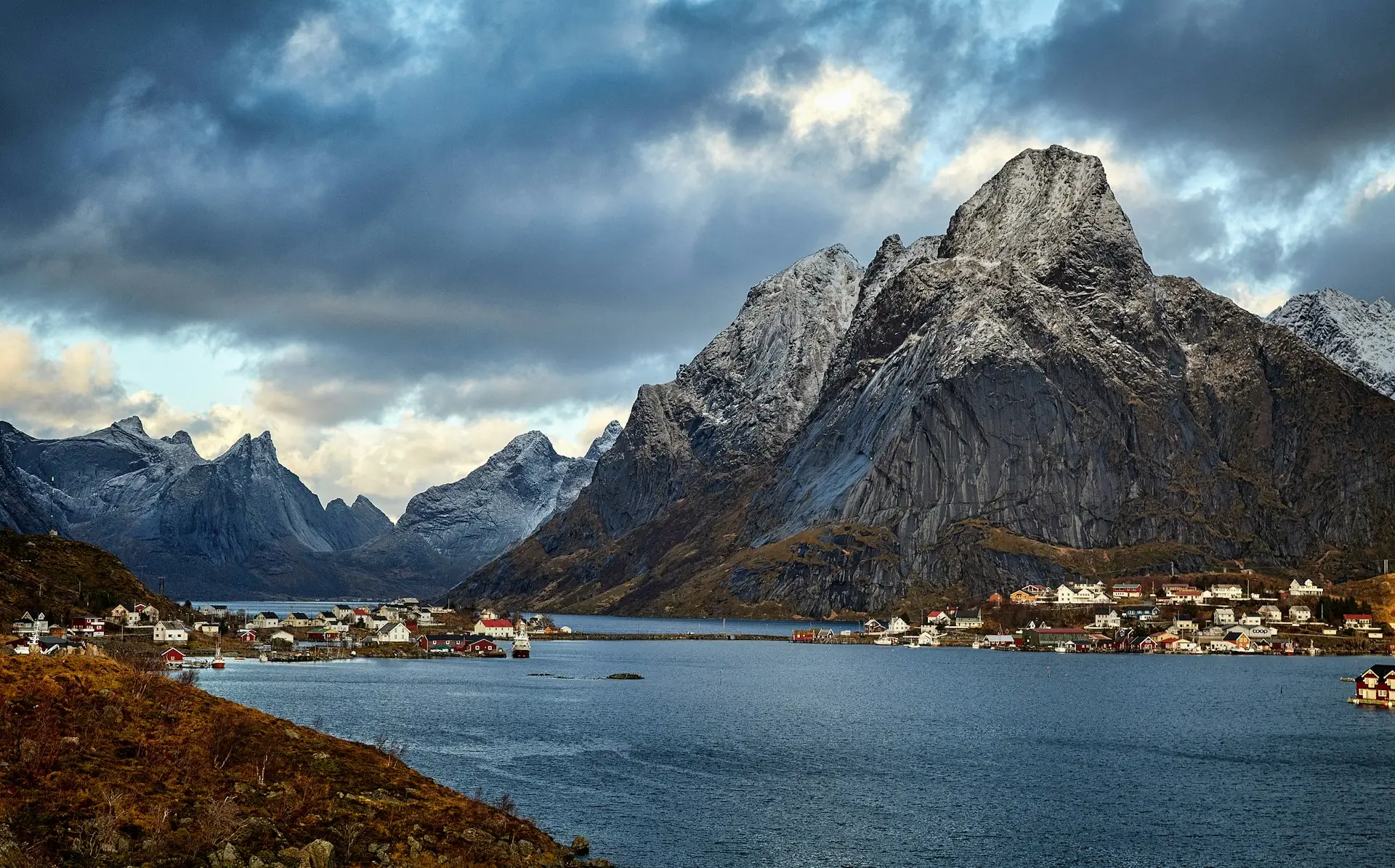
Encompassing 385,000 square kilometers, Norway occupies the western and northern extremities of Scandinavia, featuring the northernmost point on the European mainland. It shares an extensive, predominantly mountainous border with Sweden to the east, along with shorter borders with Finland and Russia. To the north, west, and south, Norway is surrounded by sea, showcasing a coastline renowned for its fjords (narrow sea inlets between cliffs) and myriad small islands. The population of Norway stands at approximately 5.3 million people.
Climate in Norway
The European Netherlands have a mild maritime climate, with moderately warm summers and cool winters marked by typically high humidity.
The Culture of Norway
Norway champions a highly acclaimed welfare model, grounded in egalitarian principles. Consequently, the nation consistently ranks at the forefront of various human development indices, including the World Happiness and Public Integrity indexes. Norway is also renowned for maintaining exceptionally low levels of crime. The government maintains substantial ownership in pivotal industry sectors, with the petroleum industry contributing to around one quarter of the country’s GDP.
Religions Observed in Norway
It was not until 2017 that the Church of Norway achieved independence from the state. Approximately 70% of Norwegians are affiliated with the Christian Church of Norway, yet only 2% attend religious services regularly. Nearly 30% of the population identifies with no specific religious belief, while the rest predominantly adhere to various other Christian denominations. Islam, constituting 4% of the population, stands as the most prominent non-Christian religion.
Languages Spoken in Norway
Norwegian and Sámi hold the status of official languages in Norway. Norwegian exhibits similarities to Swedish and Danish, with mutual intelligibility among Scandinavians. The Sámi people, particularly in the northern regions, speak and write various Sámi languages.
Norwegian Human Resources at a Glance
Employment Law Protections in Norway
The legal framework for employment in Norway is primarily shaped by national legislation and collective agreements. Given Norway’s participation in the EEA-Agreement with the EU, it incorporates the majority of EU regulations and directives related to labor laws into its national legal system. The primary sources influencing employment regulations include:
- The Constitution of 1814
- The Working Environment Act of 2005
- The State Employee Act of 2017 and other domestic legislation
- Case law
- Collective agreements
- Individual employment contracts
Employment Contracts in Norway
The Working Environment Act in Norway mandates that an employment contract must be documented in writing, encompassing, at a minimum, the following essential points:
- Identification details of each party involved in the employment agreement
- Work location
- Work description or the employee’s title, position, or category
- Commencement date
- Estimated duration of employment (for temporary contracts)
- Grounds for temporary status (in the case of a temporary contract)
- Existence of a trial period (if applicable)
- Total number of paid vacation days and the corresponding pay rate
- Notice periods
- Salary details, payment method, timing, and any additional supplements or remunerations not integrated into the base pay
- Working hours
- Break duration during the work period
- Relevance of any applicable collective agreement
Norway's Contract Terms
Norwegian labor law is generally favorable to employees compared to many other European countries and notably the USA. Employers are obligated to adhere to the complete provisions of the Working Environment Act (WEA). It is strictly prohibited, even with the employee’s consent, to waive any provisions of the WEA that could be detrimental to the employee.
A written employment contract is a mandatory requirement for all employment arrangements. The responsibility for drafting the contract lies with the employer, and it must be presented to the employee no later than one month after the commencement of work.
Typically, employment contracts are established for an indefinite period. Consequently, employees have the right to continue working for the employer until the contract is terminated by either party. Temporary and fixed-term employment arrangements may only be implemented in specific situations, such as when the nature of the work is inherently temporary.
Every employed individual is entitled to permanent employment status after three years of continuous service with the employer, irrespective of the initial basis for hiring.
Norway's Guidelines Regarding Probation Period/Trial Period
An employment contract has the option to incorporate a trial period, lasting a maximum of six months, which should be clearly defined within the contract terms. During this trial period, the threshold for a lawful dismissal with a notice period, attributed to circumstances related to the employee, is somewhat lower. This dismissal may be based on grounds such as the employee’s unsuitability for the work or a lack of proficiency or reliability.
Within the trial period, the notice period should be no less than 14 days. If the employee is absent during parts of the trial period, and this absence is unrelated to the employer, an extension of the trial period is permissible, provided this allowance is outlined in a clause within the written employment contract. Additionally, the employee must be provided with written notification of the extension before the trial period concludes.
Regulations and Rules Regarding Working Hours in Norway
In essence, the standard working hours should not exceed nine hours within a twenty-four hour period or forty hours within a seven-day period. Exceptions exist for specific groups, such as shift workers, whose weekly working hours may be fewer. An agreement between the employer and employee can establish the maximum working hours as an average over a maximum of 52 weeks, with limitations set at 10 ordinary hours per 24 hours and 48 ordinary hours per seven days. Alternative arrangements may be negotiated through a collective pay agreement between the employer and employees’ elected representatives.
The Working Environment Act (WEA) grants employees the right to flexible working hours, provided it does not cause substantial inconvenience to the employer. However, these regulations do not apply to employees in senior or particularly independent positions.
Starting at the age of 62, employees have the option of reduced working hours, granted that such reduction doesn’t cause significant disruption to the business. Similarly, this provision applies if an employee seeks reduced working hours for reasons related to health, social concerns, or serious welfare considerations.
Norwegian Laws Regarding Overtime
Overtime work and additional hours must not form a regular practice and should be reserved for exceptional circumstances. Compensation for overtime should be provided, with a minimum supplementary payment of 40% extra per hour.
Overtime is allowable only in situations of exceptional and time-limited necessity. The maximum limits for overtime are set at 10 hours in a seven-day period, 25 hours in four consecutive weeks, and 200 hours within 52 weeks. Generally, the total working hours should not exceed 13 hours in a 24-hour period and 48 hours in a seven-day period. Any extension beyond these limits requires mutual agreement between the employer and the employees’ elected representatives in organizations bound by a collective pay agreement. Notably, these regulations do not apply to employees in leadership roles or those in particularly independent positions.
Termination
Reasons for termination include:
- Dismissal for Business-related Reasons:**
– Termination of an employee due to business-related factors. - Dismissal for Reasons Specific to the Individual Employee:**
– Termination based on factors unique to the individual employee.
Collective Dismissal Based on Objective Grounds:**
– Dismissals arising from economic, technical, organizational, or productivity reasons are considered collective if at least 10 employees are given notice within a 30-day period.
– Other non-individual reasons for termination can be considered with a minimum of five affected employees.
- Resignation by the Employee:**
– Voluntary termination initiated by the employee. - Expiration of Employee Contract Term or Job Specifics:**
– Termination due to the natural conclusion of an employment contract or a specific job role. - Employer’s Death, Retirement, or Permanent Illness:**
– Termination due to the employer’s death, retirement, or permanent illness. - **Collective Dismissals:**
- Collective terminations involve at least 10 employees within a 30-day period for specified reasons.
- Strict procedures, including employee meetings, information sharing with representatives, and notification to NAV, must be followed.
- The employer defines the selection group, specifies criteria, and holds individual meetings after informing employees of the collective dismissal.
- Individual Dismissals:**
- Employees may be terminated with notice (discharge) or without notice (dismissal) based on grounds specified by the Working Environment Act (WEA).
- Dismissal without notice is reserved for severe breaches like gross misconduct.
- The WEA outlines a procedure before informing the employee.
- Notice can only be given based on objective grounds, which can be subjective personal reasons or objective reasons not related to the individual.
- Alternatives to discharge must be explored before the decision is made.
- Special protections against dismissal apply to certain categories, including pregnant women, those on maternity leave, and workers with family responsibilities.
Note: The content has been revised to enhance clarity and conciseness.
Norway's Requirements Regarding Notice Periods
During the trial period, the notice period is set at 14 days, although the employment contract or collective agreements may extend this duration. The commencement of the notice period given during the trial period is counted from the date when the employee receives the notice.
For employees hired on a permanent basis, the minimum notice period is one month, starting from the first day of the month following the date when the employee has received the termination notice in writing.
| Age of Employee/Duration of Employment | Under 50 | 50-54 | 55-59 | >60 |
|---|---|---|---|---|
| Employed for <5 years | 1 month | 1 month | 1 month | 1 month |
| Employed for >5 years | 2 months | 2 months | 2 months | 2 months |
| Employed for >10 years | 3 months | 4 months* | 5 months* | 6 months* |
*Should an employee decide to resign, the notice period is capped at three months.
An arrangement for a shorter notice period can only be negotiated between an employer and elected representatives if the enterprise is obligated by a collective agreement.
Redundancy/Severance Pay in Norway
Norway does not stipulate statutory rights to severance pay. Nevertheless, employees are entitled to their regular salary and additional contractual benefits during the notice period as specified in the employment agreement. In some instances, employers, bound by various collective agreements, may be obliged to provide severance pay.
Furthermore, employers not governed by any collective agreement have the option to offer a severance package, which may include severance pay, educational benefits, release from work duties, etc. Typically, severance payments under such agreements are determined based on factors like seniority, age, social considerations, and other relevant aspects, ranging from one to 24 months of salary. Access to these benefits usually requires the employee to enter into a termination agreement, wherein the employee waives the right to pursue legal action under the Working Environment Act (WEA). This agreement may be outlined before the employee receives notice, or the parties may reach an agreement after notice is given.
Post-Termination Restraints / Restrictive Covenants
Non-Compete Clauses:
To safeguard specific and legitimate employer interests against competition, a non-compete clause may be implemented for a duration not exceeding one year after employment termination.
For validity, the non-compete clause must be in written form and cannot be invoked post-dismissal unless the dismissal is objectively justified or reasonable.
Upon a written request from the employee, the employer must furnish, within four weeks, a written statement specifying if, and to what extent, the non-compete clause will be enforced, along with stating the particular need for protection against competition. If the employee resigns without a binding employer’s statement, the resignation is treated as a written inquiry. In case of notice by the employer without an existing binding statement, it must be provided alongside the dismissal notice.
When invoked, the employer must compensate the employee at a rate equivalent to 100% of the salary up to eight times the National Insurance basic amount. Beyond this threshold, a minimum of 70% of the salary exceeding eight times the National Insurance basic amount must be paid. Compensation is calculated based on the previous twelve months’ salary before the notice or dismissal date and may be capped at twelve times the National Insurance basic amount. Deductions (up to 50%) may apply for salary or income received during the non-compete period.
Customer Non-Solicit Clauses:
Customer non-solicitation clauses are applicable only to customers the employee had responsibility for and interacted with in the preceding 12 months. The clause, in written form, may be enforced for a maximum of one year post-employment termination.
Upon the employee’s written request, the employer must provide, within four weeks, a written statement specifying the extent to which a non-solicitation clause will be invoked, including precise details of affected customers. Failure to meet this requirement renders the non-solicitation of customers’ clause void.
Employee Non-Solicit Clauses:
Generally, employers are prohibited from entering into employee non-solicit agreements. An exception applies to negotiations and completion of transfer of undertakings, where such agreements can be entered into for a maximum period of six months.
Norwegian Timesheets
Every duration dedicated to the employer’s service should be documented as working hours. The employer is obligated to institute a systematic process for logging working hours, and employees must be acquainted with this procedure. Clarity and comprehensibility are crucial in the recording of employees’ working hours. Generally, the commencement and conclusion times of each day or shift must be documented.
Trade Unions / Collective Agreements in Norway
The primary labor unions in Norway include the LO (Norwegian Federation of Trade Unions) representing employees and the NHO (Confederation of Norwegian Business and Industry) representing employers. Both entities function as umbrella organizations comprising various smaller unions. LO-affiliated unions encompass both blue and white-collar workers, spanning the private and public sectors. These unions actively participate in political and legal matters, playing influential roles in Norwegian community and social spheres.
Trade unions’ prerogatives are outlined in the Labor Disputes Act, affording them the right to engage in collective agreements with employer organizations. The Main Agreement, serving as a foundational framework, establishes general rights and fundamental regulations for workplaces. Typically, this agreement forms the basis for many collective bargaining agreements, renegotiated every two years by affiliated organizations.
Legal disputes regarding the validity of collective bargaining agreements and issues stemming from these agreements are adjudicated by a dedicated labor court. At each enterprise where the demand arises, employees designated to represent organized employees are elected through a democratic process.
Fixed Term Contacts for Norwegian Employees
In Norway, the predominant employment arrangement is permanent, with temporary employment only permitted under specific circumstances, such as covering temporary absences or justifying fixed-term contracts based on the nature of the work. Failure to meet these specific circumstances automatically classifies the employee as permanently employed. Additionally, employees on fixed-term contracts for over four consecutive years in the same company are automatically considered permanently employed.
Regardless of the employment type, employees with fixed-term contracts have the right to be free from discrimination based on their status.
General temporary employment is feasible under certain conditions, allowing temporary employment without the need for justification by the employer. However, such temporary engagements may not extend beyond 12 months. Following this period, the employment contract may be terminated, the employee may transition to permanent employment, or be engaged under another fixed-term contract, subject to the specified circumstances. If a new position is not offered, the employer cannot hire a new temporary employee for the same type of work on a general basis.
Temporary employment engagements are capped at 15% of the total workforce, but a company is always allowed to have at least one employee on such an engagement. As with fixed-term contracts, temporary employees, in all cases, have the right to be free from discrimination based on their status.
Tax and Social Security Information for Employers in Norway
Personal Income Tax in Norway
Norway’s taxation system comprises two components for employee income: the general income tax, calculated on a net base (ordinary income), and the personal income tax, calculated on a gross base. The personal income tax includes the bracket tax and social security contributions for employees, acting as a progressive tax on gross salary and other personal income.
General Income Tax
The general income tax for employees is a flat rate of 22%, applied to all categories of taxable income, encompassing earnings from employment, business, and capital. Deductions for tax allowances, allowable expenses, and certain losses are considered when computing the general income tax.
Bracket Tax on Personal Income
The bracket tax for personal income is determined by the individual’s salary income and other related incomes that substitute salary income, such as sick pay, work assessment allowance, disability benefit, and pension.
The bracket tax rates for 2023 are as follows: [Specify the bracket tax rates for 2023]
| Income bracket | Tax % | |
|---|---|---|
| below 198,350 | 0 | |
| Step 1 | 198,350 – 279,150 | 1.7 |
| Step 2 | 279,150 – 642,950 | 4.0 |
| Step 3 | 642,950 – 926,800 | 13.4 |
| Step 4 | 926,800 – 1,500,000 | 16.5 |
| Step 5 | above 1,500,000 | 17.5 |
Social Security in Norway
Employee Social Security contribution – 8.2%
Employer Social Security contribution – 14.1%
(Note: Employers are also required to contribute to an employee’s mandatory occupational pension scheme, with a minimum contribution of 2%.)
*The provided rates are general indications; the actual rates applied by GoGlobal may vary.
Important Information for Norwegian Employees
Salary Payment
In Norway, it is customary to arrange for monthly wage payments directly deposited into the designated bank account of the employee. Following the disbursement of wages, or promptly thereafter, the employer is obligated to furnish the employee with a pay slip. Generally, an employer is not permitted to make deductions from an employee’s salary or holiday pay, except in cases explicitly stipulated by law or agreed upon in writing beforehand.
Payslip
The salary statement, known as a ‘lønnsslipp,’ must display the gross salary, tax amounts, and any other deductions from the gross salary, along with the net amount (‘netto’). Additionally, it should outline the calculation basis for holiday pay.
Annual Leave
The Annual Holiday Act specifies that employees are entitled to 25 days of paid leave annually, equivalent to four full weeks and one day, considering Saturdays as working days. Many collective agreements extend this entitlement, making five weeks of leave the common practice in Norway, especially for white-collar workers. Upon reaching the age of 60, employees gain an extra six working days of leave.
The holiday year runs from January 1st to December 31st, with a general rule allowing employees three consecutive weeks of leave between June 1st and September 30th.
Holiday pay, as mandated by the Annual Holiday Act, is 10.2% of the previous year’s annual wages. This percentage increases to 12% if an employee is entitled to five weeks of leave through an agreement. For those over 60 with an extra week, the holiday pay is either 12.5% or 14.3%, depending on whether they have five or six weeks of leave.
Calculation of holiday pay is based on the previous year’s salary and is typically paid on the last regular payday before the holiday or during a specified month. It is not permitted for employers to include holiday pay in regular wages unless specified in collective agreements.
Regarding carry-over rules, employers are responsible for ensuring employees utilize their holiday entitlement within the current holiday year. However, an agreement between the employer and employee can permit carrying forward up to 12 days (two weeks) to the next holiday year, with contractual entitlements governed by collective agreements or contracts.
Eligibility for annual leave varies by location, and workers may carry over their annual leave; however, the accumulation of earned leave is typically capped at a maximum of 45 days.
If an employment contract expires before a worker can take their annual leave, compensation for the leave is calculated proportionately based on the number of months worked and the number of working hours per week.
Sick Leave
If an employee falls ill, they are required to promptly inform the employer of their condition. Typically, the employer covers compensation for the initial 16 days of the employee’s sick leave, given that the employee has completed a qualifying period of at least four weeks. Sick pay is applicable for a duration of one year. Following the employer’s initial responsibility period, the National Insurance Scheme takes over payment. However, there is a limit on the amount of sick pay provided by the Social Security, allowing the employee to receive 100% of their regular salary, up to approximately NOK 561,804 per year.
Compassionate & Bereavement Leave
Norwegian law does not mandate paid bereavement leave. The entitlement to such leave, along with whether it is granted with or without pay, is typically outlined in agreements like collective agreements, employment contracts, or internal company policies. Generally, in the absence of a specific agreement, many companies provide at least two days of paid bereavement leave in the case of the death of a close family member.
Other Rights for Leave of Absence
Leave entitlements for caregivers in Norway are as follows:
**Children:**
If an employee’s child is ill, they have the right to a maximum of 10 days’ leave per calendar year. This increases to 15 days if the employee is caring for two or more children.
Sole caregivers of a sick child are entitled to double the standard leave period.
In cases of chronic or long-term illness or disability of the child, with an increased risk of the employee being absent, a maximum of 20 days’ leave per calendar year is granted. Sole caregivers can take double this period.
**Close Relatives:**
– Employees caring for a close relative with a terminal illness are entitled to 60 days’ leave of absence.
**Parents, Spouse, Cohabitant, or Registered Partner:**
Employees can take up to ten days of leave per calendar year to provide necessary care to a parent, spouse, cohabitant, or registered partner.
Maternity & Parental Leave
Family Leave in Norway: Pregnancy, Maternity, and Parental Leave
Pregnancy Leave:
A pregnant employee is entitled to a voluntary leave of up to twelve weeks during pregnancy.
Sickness absence during pregnancy is treated separately as sickness leave and does not deduct from the pregnancy leave.
This right is part of the statutory maternity benefits outlined in the National Insurance Acts.
Maternity Leave:
Following childbirth, the mother must take a leave of at least six weeks, except when a medical certificate recommends an earlier return to work.
Parental Leave:
Parents have a combined entitlement to a total of 12 months of leave, inclusive of pregnancy and maternity leave.
This leave commences immediately after the mother’s pregnancy and maternity leave.
Both parents are allocated 10 weeks each, with the mother’s mandatory six weeks included in her share.
The remaining period can be flexibly divided between the parents.
Additionally, the father has the right to two weeks of unpaid leave connected to the birth.
Social Security provides compensation for lost wages during the first year of leave for employed parents.
Some employment contracts may offer full payment during this period.
Each parent also has the right to 12 months of unpaid leave for each birth.
These leave provisions extend to situations of adoption.
Public Holidays
There are ten public holidays annually, designated as non-working days.
Benefits to the Employee in Country
Norwegian Statutory Benefits
The National Insurance Act of 1997 establishes the structure for social security provisions, known as the National Insurance Scheme, in Norway. Individuals residing in Norway, including employees, are generally required to be members of this scheme and make contributions. Employers are also obligated to contribute to social security based on employees’ wages and other forms of remuneration.
Members of the National Insurance Scheme are entitled to the following statutory benefits:
- Pension for the elderly
- Pension for survivors
- Pension for individuals with disabilities
- Basic benefit and attendance benefit for those with disabilities
- Rehabilitation benefits
- Benefits for occupational injuries
- Support for single parents
- Cash benefits during sickness
- Benefits for maternity and adoption
- Unemployment benefits
- Medical benefits during sickness
- Maternity and funeral grants
The state heavily subsidizes the public healthcare system in Norway, making private health insurance plans rare. Such plans are typically only extended to high-ranking employees, if offered at all.
Pension
Every employee is entitled to a retirement pension under the National Insurance Scheme. Since 2006, employers are required to establish a pension plan for their employees, supplementing the National Insurance retirement pension. The Compulsory Occupational Pension scheme mandates a minimum deduction of 2% from employees’ salaries. Employers in the private sector can choose from three pension schemes: a defined benefit scheme, a defined contribution scheme, or a combination of both.
Additional Benefits
Additional benefits are typically stipulated in individual employment contracts or collective bargaining agreements. The extent of benefits often correlates with the employee’s seniority level. Common benefits for senior-level employees include:
- Extra paid holidays beyond statutory requirements
- Supplementary contributions to private pension insurance
- Provision of private health insurance and life insurance policies
- Employer contributions during parental leave, supplementing state benefits
Rules Regarding Visas and Foreign Workers in Norway
General Information
Norway has long been a participant in both the Nordic and European labor markets, being a member of the EEA Agreement and the EFTA Convention. The Immigration Act and Regulation of 2013 govern labor immigration, simplifying the process for EU/EEA/EFTA nationals who now need only register with the police for stays exceeding three months.
For individuals from non-EEA/EFTA countries (termed third countries), immigration regulations have been streamlined, offering Norwegian employers greater ease in recruiting foreign talent. The legislation allows certain skilled workers to commence employment before obtaining a permit.
Foreign employees from outside the EEA/EFTA area generally require a residence permit with work authorization, obtainable from the Foreign Service Mission or the Norwegian Directorate of Immigration. Permit types vary based on the individual’s status, such as skilled worker, unskilled worker, specialist, student, or researcher.
Notably, there are no nationality-based quotas or preferences.
Processing times vary depending on the worker’s category and application method, but a minimum of two months should be anticipated.
The current fee for residence permits for work purposes is NOK 6,300.
Employers bear the responsibility of verifying that their employees possess valid work and residence permits, retaining copies of relevant documents for 12 months post-employment. Employers failing to comply may face penalties, including fines or, in severe cases, imprisonment.
Getting a Tax Number
Individuals residing in Norway for six months or more will be assigned a National Identity Number, an eleven-digit ID comprising the first six digits derived from their date of birth and the last five known as the “personal number.” This number facilitates various essential activities such as opening a bank account, securing a regular general practitioner (fastlege), renting a residence, fulfilling tax obligations, and participating in elections.
Residents falling under EU/EEA regulations will obtain their national identity number from the tax administration after their initial registration with the police.
Those granted a residence permit in Norway will receive their tax number details via a letter from the tax administration approximately two to six weeks after their meeting with the police to process the residence card.
Public Holidays Recognized by Norway in 2024
| Occasion | Date | |
|---|---|---|
| 1 | New Year’s Day | January 1 |
| 2 | Maundy Thursday | March 28 |
| 3 | Good Friday | March 29 |
| 4 | Easter Sunday | March 31 |
| 5 | Easter Monday | April 1 |
| 6 | Labour Day | May 1 |
| 7 | Ascension Day | May 9 |
| 8 | Constitution Day | May 17 |
| 9 | Whitsun | May 19 |
| 10 | Whit Monday | May 20 |
| 11 | Christmas Day | December 25 |
| 12 | Second Day of Christmas | December 26 |
Hire New Talent in Norway
Our global hiring services enable you to onboard personnel in any country without the financial commitment required to establish a local entity.