

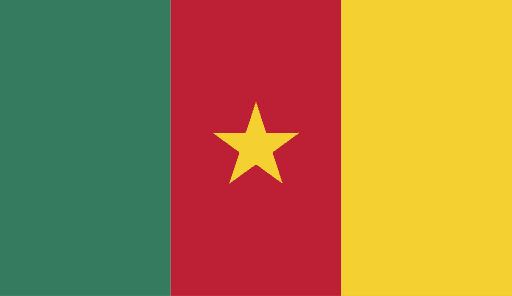
Hire in Cameroon
Begin your journey into human resources best practices and the hiring process in Cameroon with the following steps.

Currency of Cameroon
Central African CFA Franc (XAF)

The Capital of Cameroon
Yaoundé
Time Zone in Cameroon
GMT+1
Important Facts About the Country of Cameroon
Introduction to Cameroon
Cameroon, officially the Republic of Cameroon, holds a strategic position at the intersection of West Africa and Central Africa. Often referred to as “Africa in miniature,” the country is characterized by its diverse geography, languages, and cultures, with nearly 27 million inhabitants. While Yaoundé serves as the political capital, Douala stands as the largest city and economic hub of Cameroon.
What to Know about Cameroon’s Geography
Covering approximately 475,442 square kilometers, Cameroon shares borders with Nigeria to the west and north, Chad to the northeast, the Central African Republic to the east, and Equatorial Guinea, Gabon, and the Republic of Congo to the south. The country’s coastline lies along the Bight of Biafra, a segment of the Gulf of Guinea and the Atlantic Ocean.
Climate in Cameroon
Cameroon’s southern region exhibits a humid and equatorial climate, featuring temperatures that hover between 20-25°C (68-77°F). The wettest locales experience monthly rainfall exceeding 400 millimeters (15.7 inches). In contrast, the northern region of Cameroon is semiarid and arid, with temperatures generally ranging from 25-30°C (77-86°F).
The Culture of Cameroon
Cameroon takes pride in its rich and diverse culture, comprising around 250 indigenous groups each with their distinct languages and customs. The country’s geographical diversity is equally remarkable, encompassing all of Africa’s landscapes within its borders. This diversity significantly contributes to the cultural richness observed in Cameroon, where lifestyles, traditional cuisine, and customs exhibit variations from one region to another.
Religions Observed in Cameroon
In Cameroon, there exists notable religious diversity and freedom. Christianity holds a predominant position, with more than two-thirds of the population identifying with this faith. Islam, constituting a significant minority, is practiced by around one-fourth of the population.
Languages Spoken in Cameroon
Cameroon recognizes two official languages, English and French, although French is the more widely understood language, spoken by nearly 80% of the population. Moreover, the linguistic landscape is exceptionally diverse, with almost 20 million Cameroonians conversing in approximately 250 other languages, positioning the country as one of the most linguistically diverse nations globally.
Cameroon Human Resources at a Glance
Employment Law Protections in Cameroon
The key legal framework overseeing employment relationships in Cameroon is the 1992 Labor Code. Supplementary regulations include:
- Constitution of the Republic of Cameroon 1972
- Penal Code 1967
- Social Security Profile for Cameroon 2017
- Decree on Deviations of Legal Working Hours
- Collective agreements, which vary based on the principal activity of the company.
Employment Contracts in Cameroon
Employment contracts can be formed through verbal or written agreements, and both fixed-term and indefinite-term contracts are permissible. However, if a fixed-term contract extends beyond three months or necessitates the employee’s relocation from their usual residence, it must be documented in writing. Additionally, a copy of the contract must be forwarded to the local Labor Inspector.
Cameroon's Fixed Term Contract Terms
When a working arrangement extends beyond the conclusion of a fixed-term contract, it is imperative to convert the contract into an indefinite-term contract. However, certain types of contracts classified as fixed-term cannot be renewed:
- A contract contingent on the occurrence of a future but certain event, beyond the control of both parties.
- A contract established for the completion of a specified task.
In the case of a foreign national employed on a fixed-term contract, renewal is possible only after obtaining approval from the minister responsible for labor.
Pre-Employment Checks
Cameroonian law does not restrict employers from performing background checks, which may include assessments of criminal records and medical history.
Cameroon's Guidelines Regarding Probation Period/Trial Period
In Cameroon, the probationary period for an employee is capped at six months, encompassing any potential renewals. However, for managerial positions, the duration may be extended to a maximum of eight months.
Renewal of the probationary period is allowed once, contingent upon the employee’s written consent before the initial trial period concludes. Failure to provide written approval results in the completion of the probationary period, and the employee is considered to have been permanently hired.
Regulations and Rules Regarding Working Hours in Cameroon
As per Cameroonian labor law, non-agricultural public and private establishments are mandated to maintain a workweek not exceeding 40 hours or a work month surpassing 173 hours.
Furthermore, employees have the right to a weekly rest day, spanning a minimum of 24 consecutive hours.
Cameroon's Laws Regarding Overtime
In Cameroon, any hours worked beyond the standard 40-hour workweek are categorized as overtime and are remunerated according to the following structure:
During regular work hours:
- The initial 8 overtime hours receive compensation at 20% of the employee’s hourly wage.
- The subsequent 8 hours of overtime are compensated at 30% of the employee’s hourly wage.
- Any additional overtime hours (up to 20 hours per week) are compensated at 40% of the employee’s hourly wage.
On Sundays, overtime hours worked are remunerated at 50% of the employee’s hourly wage.
Similarly, on public holidays, any overtime hours worked receive compensation at 50% of the employee’s hourly wage.
Timesheets
In Cameroon, employers are required to uphold and periodically update a workplace register known as the “employer’s register.” This register should encompass information enabling labor and social insurance agencies to conduct inspections.
Medical Check-ups
By law, medical examinations are compulsory and must occur within three months of the employee’s probationary period.
Bonus and 13th Month Pay
Unless a more favorable policy is in place, employees completing twelve months of service in the organization are entitled to receive an allowance known as the thirteenth-month allowance at the end of the year. This allowance is equivalent to one month of category salary, augmented by the seniority bonus.
For employees with less than twelve months of service, the allowance will be determined pro-rata.
Termination
If either party desires to conclude an indefinite-term contract, they are required to furnish advance notice or offer payment in lieu. The notice must be documented in writing and articulate the reason for termination.
The legality of the termination hinges on the circumstances, and if contested in court, the employer is obligated to substantiate it with a valid reason, such as gross misconduct or redundancy. Fixed-term contracts cannot be concluded prematurely unless for reasons like gross misconduct, force majeure, or with the written consent of both parties.
Certain categories of employees, such as pregnant women, worker’s representatives, trade union officials, and employees on sick leave, enjoy protection against dismissal.
Cameroon's Requirements Regarding Notice Periods
In Cameroon, employers possess the authority to terminate a permanent employment contract either by issuing notice or providing payment in lieu of notice. The notice, which must be in writing and offer a distinct reason for termination, varies in duration based on the employee’s professional category and length of service, spanning from one to four months.
Upon receiving notice, the employee is granted two paid days off per week to facilitate the search for new employment. This provision aims to ensure that the employee has sufficient time and resources to explore new job opportunities.
Redundancy/Severance Pay in Cameroon
The severance pay amount is determined by the length of service and corresponds to a percentage of the monthly gross salary for the preceding 12 months:
- Less than 5 years of service: 25% of the salary for the last 12 months
- 6 – 10 years of service: 30% of the salary for the last 12 months
- 11 – 15 years of service: 40% of the salary for the last 12 months
- 16 – 20 years of service: 45% of the salary for the last 12 months
- Over 20 years of service: 50% of the salary for the last 12 months
Post-Termination Restraints/Restrictive Covenants
Non-competition clauses can be incorporated into employment contracts, as there is no legal prohibition against them.
Data Protection
Cameroon lacks a dedicated data protection law. Nevertheless, legal safeguards for data protection are dispersed across various regulations, encompassing the Constitution and the Law on Electronic Communications.
Tax and Social Security Information for Employers in Cameroon
Personal Income Tax in Cameroon
Income derived from employment in Cameroon is liable to personal income taxes, imposed at the following progressive rates.
| Annual Taxable Income (XAF) | Tax Rate (%) |
|---|---|
| 0 – 2,000,000 | 11 |
| 2,000,001 – 3,000,000 | 16.5 |
| 3,000,001 – 5,000,000 | 27.5 |
| 5,000,001 and above | 38.5 |
Social Security in Cameroon
In Cameroon, both employees and employers are required to make contributions to the National Social Insurance Fund (‘NSIF’) according to the following terms:
| Type | Contribution by Employer (%) | Contribution by Employee (%) | Monthly Salary Cap (XAF) |
|---|---|---|---|
| National Social Insurance Fund (Pension CNPS) | 4.2 | 4.2 | 750,000 |
| Family Allowance (Prestations Familiales) | 7 | NA | 750,000 |
| Industrial accident / Occupational disease (Accidents du travail) | 1.75 – 5.00 | NA | NA |
The employee’s contributions are deducted monthly at the source by the employer. Additionally, employers and employees in Cameroon are mandated to contribute to the Housing Fund and National Employment Fund of Cameroon as outlined below:
| Type | Contribution by Employer (%) | Contribution by Employee (%) |
|---|---|---|
| Housing Fund (Credit Foncier) | 1.5 | 1 |
| National Employment Fund (NEF) | 1 | NA |
| Local Council Tax | NA | Amount according to the employee salary |
| Audiovisual tax | NA | Amount according to the employee salary |
*The rates provided above serve as a general guideline. Actual rates applied may vary.
Important Information for Cameroonian Employees
Salary Payment
In Cameroon, employers are required to disburse monthly salaries in a legal currency within eight days following the conclusion of the corresponding month. Salary payments must exclusively occur on working days and in a location proximate to the workplace. The labor code explicitly prohibits the payment of salaries in public houses and shops.
Payslip
Cameroon’s labor code mandates employers to furnish employees with an individual pay voucher at the time of payment. The pay voucher must adhere to the format specified by the minister responsible for labor.
Annual Leave
In Cameroon, employees accrue two days of annual leave for every month of service. Upon completing one year of employment, employees become eligible for 18 days of paid annual leave.
The annual leave entitlement grows by two working days for each full five-year period of employment, regardless of continuity. Dividing the annual leave is permissible, with one of the segments comprising at least 12 consecutive days. Compensation in lieu of leave is strictly prohibited except in cases of termination.
Mothers are entitled to additional leave based on the age of their children.
Sick Leave
In Cameroon, employees can be granted up to six months of paid sick leave upon presentation of a medical report. Following this period, the employer possesses the legal authority to terminate the contract.
Absence Leave
In Cameroon, employees have the right to a maximum of ten days per year of paid special leave to attend family events directly involving them.
Training Leave
In Cameroon, employees have the entitlement to take up to 18 working days of unpaid training leave to participate in a recognized course. The division of this leave is permissible with mutual agreement.
Training leave is considered as an actual service period when calculating the employee’s length of service with the company.
Maternity & Paternity Leave
Maternity Leave
Pregnant women in Cameroon are entitled to a maternity leave of up to 14 weeks, comprising four weeks prenatal and 10 weeks post-natal. In cases where a properly proven illness arises from either the birth or the pregnancy, the maternity leave may be extended by six weeks, totaling 20 weeks. The National Social Insurance Fund covers the pay during maternity leave.
It is strictly prohibited for employers to terminate employees on maternity leave.
Additionally, mothers have the right to breastfeeding breaks for up to 15 months after giving birth. These breaks, not exceeding one hour in total per day, must be taken during working hours and are compensated.
Paternity Leave
Male employees in Cameroon have the right to three days of paternity leave.
Public Holidays
Cameroon typically observes 10 national holidays, and the government may introduce one-time holiday events throughout the year.
Benefits to the Employee in Cameroon
Cameroonian Statutory Benefits
In Cameroon, employees have the right to several statutory benefits, encompassing national social security insurance, industrial accident/occupational disease insurance, family allowances, housing fund, employment fund, transport allowance, maternity leave, paternity leave, annual leave, absence leave, and sick leave. These benefits are stipulated by both law and collective agreements.
Other Benefits
Beyond the mandated entitlements, it is customary for employers in Cameroon to provide the following additional benefits:
- Year-end bonuses
- Private health and life insurance
- Allowances for electricity, water, phone, and domestic servants
- Extended or supplementary leave days
Rules Regarding Visas and Foreign Workers in Cameroon
General Information
Visas
To enter Cameroon, most foreign nationals are required to secure a visa from a Cameroonian embassy or consulate. However, citizens from the Central African Republic, Chad, the Republic of the Congo, Equatorial Guinea, Gabon, and Nigeria are exempt from a visa requirement for stays up to 90 days. Some citizens of specific countries can obtain a visa upon arrival, while others must contact the embassy or consulate of Cameroon before departure to understand the visa requirements and application process.
Cameroon offers various types of visas catering to different purposes such as tourism, business, study, transit, and volunteering. The visa duration can extend up to six months. Should a foreigner wish to prolong their stay, they must apply for a Cameroon residence permit.
Work Permits
Prior to commencing employment, foreign nationals are required to secure approval from the Minister in charge of Labor. The responsibility for submitting the endorsement request lies with the employer. In the event of endorsement denial, the contract becomes void. If there is no response from the Minister of Labor within two months of receiving the application, the contract is deemed endorsed.
To work in Cameroon, a foreign national must initially obtain a work visa and subsequently apply for a residence permit. Additionally, they will need a letter of invitation from their employer, detailing aspects such as the work duration and financial and legal responsibilities. The employment contract must be legalized and signed by the Minister of Labor and Social Security in Cameroon.
Public Holidays Recognized by Cameroon in 2024
| Occasion | Date | |
|---|---|---|
| 1 | New Year’s Day | January 1 |
| 2 | Youth Day | February 11 |
| 3 | Youth Day Holiday | February 12 |
| 4 | Good Friday | March 29 |
| 5 | Djouldé Soumaé | April 10 |
| 6 | Labour Day | May 1 |
| 7 | Ascension Day | May 9 |
| 8 | National Day | May 20 |
| 9 | Tabaski | June 16 |
| 10 | Assumption Day | August 15 |
| 11 | Christmas Day | December 25 |
Hire New Talent in Cameroon
Our global hiring solutions enable you to onboard talent in any country without the necessity of investing in establishing a local entity.